Shop Saphir Renovateur on Amazon →
Ask any group of well-shod men to name the single product they’d save from a house fire, and one jar comes up more often than any other: Saphir Médaille d’Or Renovateur. It has been called “liquid gold” by its own maker, tested against nearly every competitor on the market, and priced high enough to make first-time buyers wince before they’ve even opened the lid. The question worth answering isn’t whether Renovateur works — the consensus on that is settled — it’s whether it’s worth building your entire care routine around, or whether it’s an overpriced ritual for leather that would do just fine with something cheaper.
What Is Saphir Renovateur?
Renovateur sits at the top of the Saphir Médaille d’Or lineup, a French heritage brand with roots dating back to 1925. It occupies a specific niche in a shoe care routine: part cleaner, part deep conditioner, applied before any polish or wax touches the leather. Unlike a shoe cream, which adds color and light shine, Renovateur’s job is restorative — it lifts old polish and grime while driving moisture and oils back into leather that has dried out from wear, weather, or neglect (The Shoe Care Shop).
Saphir sells a lighter counterpart called Lotion for everyday touch-ups, and a separate cleaning-only product called Reno’mat for heavier grime removal. Renovateur is positioned between the two in aggressiveness but ahead of both in richness, which is exactly why it has become the benchmark product reviewers measure everything else against (Saphir Médaille d’Or UK).
The Formula: What’s Actually in the Jar
Renovateur’s reputation comes down to three core ingredients: mink oil, lanolin, and purified beeswax. The mink oil is the standout — a genuine animal-derived oil that mirrors the natural lipids in leather (itself an animal skin), which is why the brand markets it as replenishing rather than simply coating. Lanolin adds moisture retention, and beeswax contributes a light protective finish once everything has absorbed (Langer & Messmer). The cream is pH-balanced and free of silicone oils, resins, and harsh solvents — a detail that matters because silicone-based conditioners can clog leather’s pores over time rather than feeding them.
Renovateur vs. Lotion: Which One Do You Actually Need
If you’re staring at both products on a shelf, the distinction is simple. Lotion is thinner, more diluted, and safe for frequent use — weekly or biweekly — making it the better choice for everyday maintenance and for treating larger leather goods like bags or furniture. Renovateur is concentrated and richer, meant for monthly deep restoration rather than routine upkeep. Saphir itself recommends capping Renovateur use at once a week to avoid oversaturating the leather with oil (Saphir Médaille d’Or Shop).
How to Use Saphir Renovateur Properly
The application process is straightforward, but the details matter more than they seem:
- Remove laces and brush away surface dirt with a horsehair brush. If the leather is heavily soiled, clean with a dedicated leather cleaner like Reno’mat first.
- Take a dab of cream roughly a centimeter in diameter on a cotton rag, cotton pad, or your finger. Because the formula is concentrated, this small amount covers nearly half a shoe.
- Work it into the leather in quick circular motions, covering the entire upper, including the tongue. Don’t be alarmed if some polish color transfers to your rag — that’s the mild cleaning agents dissolving old product so the oils can penetrate.
- Keep applying thin layers until the leather stops absorbing quickly and the surface feels slightly tacky. That’s your signal you’ve conditioned thoroughly.
- Let it sit overnight, then buff with a clean horsehair brush the next day.
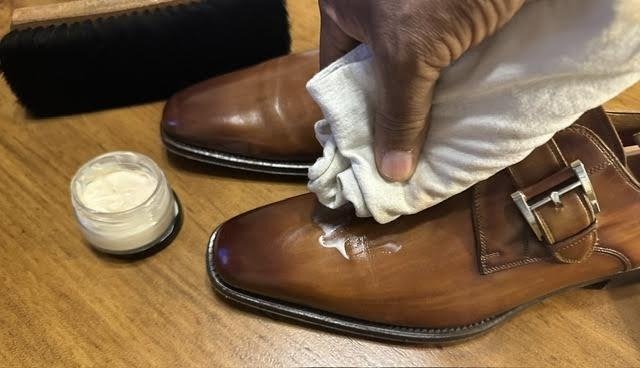
Because Renovateur strips away existing finish as it cleans, it should always go on before cream or wax — never after (Shoe Tree Project).
Performance: Does It Live Up to the Hype
On dried-out, neglected leather, Renovateur genuinely earns its reputation. Stridewise’s hands-on testing found the cream highly concentrated and slower to sink in than lighter conditioners, meaning a single dab spreads further than an equivalent amount of cheaper alternatives — the reviewer came away impressed with the results, even while questioning whether the finish justifies the price gap over Venetian Shoe Cream. One jar is estimated to last around 100 shines, which meaningfully offsets the sticker price over time.
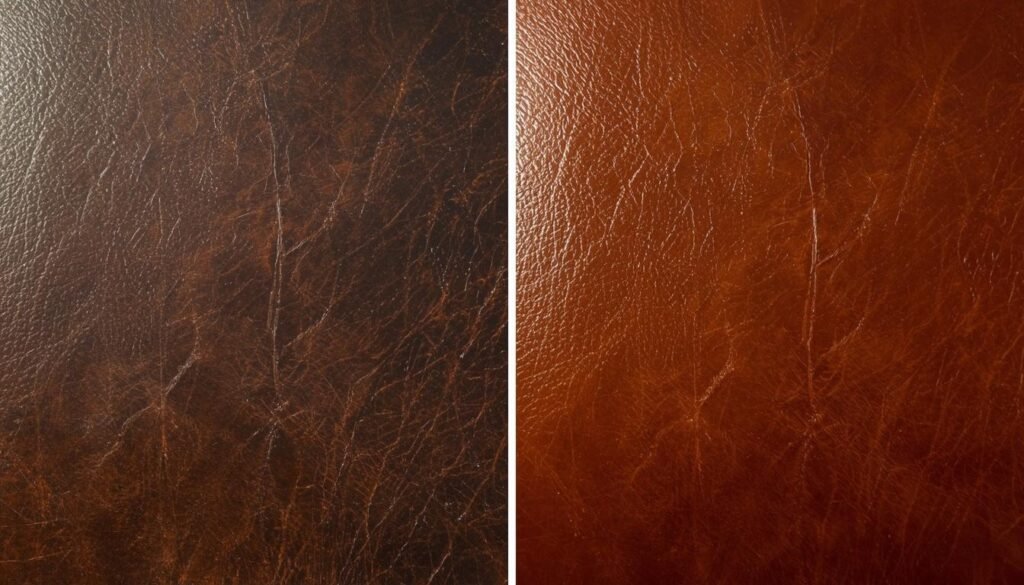
That said, Renovateur isn’t flawless. Its strength — deep penetration and a genuinely intensive clean — is also its risk. Reviewers note it can strip existing finish more aggressively than gentler products if you’re not careful, and it can stain certain lighter or more delicate leathers if overapplied (The Shoe Snob). It also isn’t a standalone protectant: because it prioritizes conditioning oils over waxes, you still need to follow up with a proper shoe cream or wax for shine and weather protection (The Shoe Care Shop). Some longtime users on menswear forums have also pushed back on the idea that Renovateur is essential for every shoe in rotation, arguing it’s better reserved for genuine restoration jobs rather than routine care (Put This On).
Building a shoe care shelf from scratch? Start here — our full breakdown of the essential tools for a proper leather care routine covers where Renovateur fits alongside brushes, creams, and waxes.
Price and Value: Is It Worth $9 an Ounce?
This is where the debate actually lives. Renovateur runs roughly $9 per ounce, compared to about $3 per ounce for its closest rival, Venetian Shoe Cream, and closer to $1 per ounce for budget options like Lexol or Bick 4 (Stridewise). A standard 75ml jar typically lands between $25 and $33 depending on retailer.
Head-to-head testing against Venetian Shoe Cream found the gap in real-world results narrower than the price gap suggests. On smooth, dressy calfskin, Renovateur brought a slightly better shine and easier spreadability. On thicker, more rugged leathers common in boots, testers found little meaningful difference and leaned toward recommending the cheaper option instead (Stridewise).
| Product | Approx. Price per Ounce | Best For |
| Saphir Renovateur | ~$9 | Fine calfskin, restoration, deep monthly care |
| Venetian Shoe Cream | ~$3 | Boots, everyday leathers, budget-conscious care |
| Lexol / Bick 4 | ~$1 | Basic maintenance, work boots, low-stakes leather |
Pros and Cons
Pros
- Genuinely restorative on dry, neglected, or older leather
- Highly concentrated — small amounts cover large surfaces
- Cleans and conditions in a single step
- pH-balanced, free of silicone, resin, and solvents
- Enhances shine and spreadability noticeably on fine calfskin
Cons
- Expensive relative to nearly every competitor
- Can strip finish or stain some leathers if overapplied
- Requires a follow-up cream or wax for real protection
- Marginal advantage over cheaper options on thick, casual leathers like boots
Who Should (and Shouldn’t) Buy Saphir Renovateur
If your collection leans toward fine calfskin dress shoes — the kind you’re trying to keep supple for years, not just presentable for a week — Renovateur is worth the premium. It’s also the right call if you’ve inherited or picked up a pair of quality shoes that have gone dry and dull from neglect; that’s the scenario where its restorative power shows up most clearly.
If your rotation is mostly boots or thicker, everyday leather, the calculus changes. The testing is fairly consistent: on hardier leathers, Venetian Shoe Cream performs close enough to Renovateur that the three-times price difference is hard to justify.
Frequently Asked Questions
Is Saphir Renovateur safe for all leather types?
It’s formulated for smooth, full-grain leathers. Avoid using it on suede, nubuck, or patent leather, which require entirely different products.
How often should I use Renovateur?
No more than once a week, and typically once a month is enough for maintenance. It’s a deep-conditioning treatment, not a daily-use product.
Do I still need shoe polish after using Renovateur?
Yes. Renovateur restores and conditions but doesn’t provide a durable shine or weatherproofing on its own — follow up with a cream or wax.
Why is Saphir Renovateur so much more expensive than other conditioners?
The concentration of mink oil, lanolin, and beeswax, combined with the amount of product used per application being small, is Saphir’s justification. Independent testing supports that it goes further per ounce than most competitors, though not enough to close the full price gap on every leather type.
Final Verdict
Saphir Renovateur earns its reputation on fine leather — it’s concentrated, effective, and noticeably better at restoring calfskin that’s dried out or dulled with age. Where it loses ground is on value for boots and heavier leathers, where a fraction of the price gets you results close enough that most people won’t notice the difference. Buy it for your dress shoes. Skip it for your work boots.
Ready to build out the rest of your shoe care kit the right way? Start here — see our complete guide to the creams, waxes, and brushes that pair best with Renovateur.