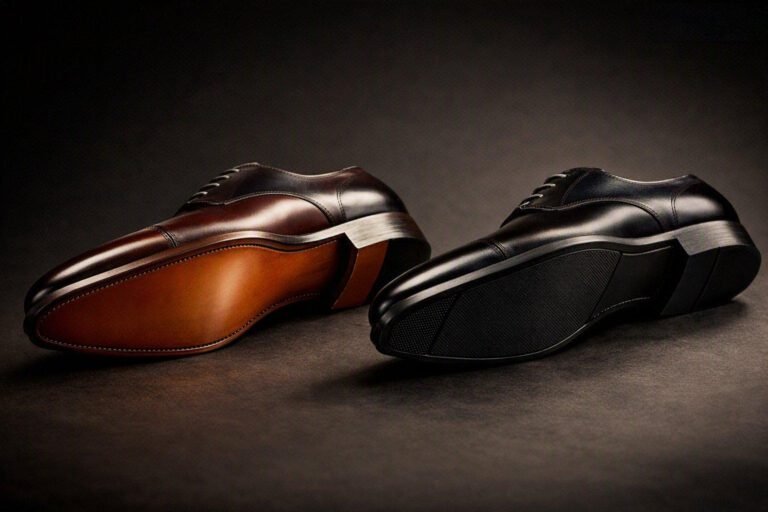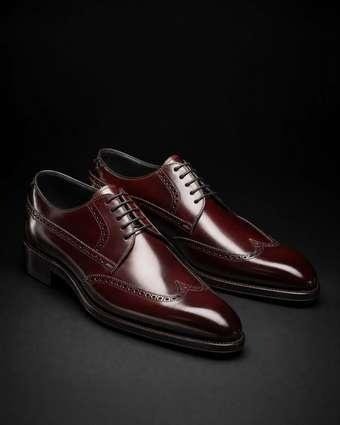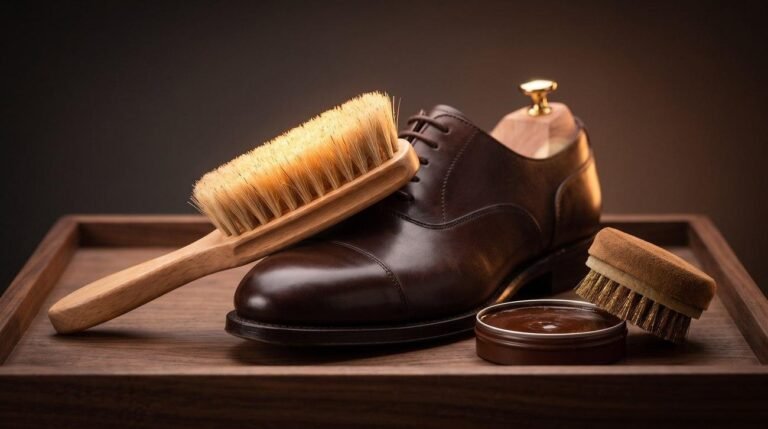
It helps to think of your shoe care kit as a workstation, not a box of random products. When everything has a place and a purpose, you are far more likely to build the consistent routine that keeps good shoes looking sharp for years.
Your Shoe Care Station
My own kit lives in a wicker basket rather than a traditional wooden shine box. Wicker is larger than most off-the-shelf boxes and looks more at home in my study, where I do most of my polishing. I cut heavy corrugated cardboard into panels to create simple dividers for creams, waxes, brushes, and cloths. A lidded box or basket keeps dust off your products and lets you carry everything from room to room in one hand, tall enough to stand polish jars upright, long enough for a full-size brush and a pair of shoe trees. Over time it becomes a dedicated station that feels as intentional as a watch box.
Core Polishes: Creams and Waxes
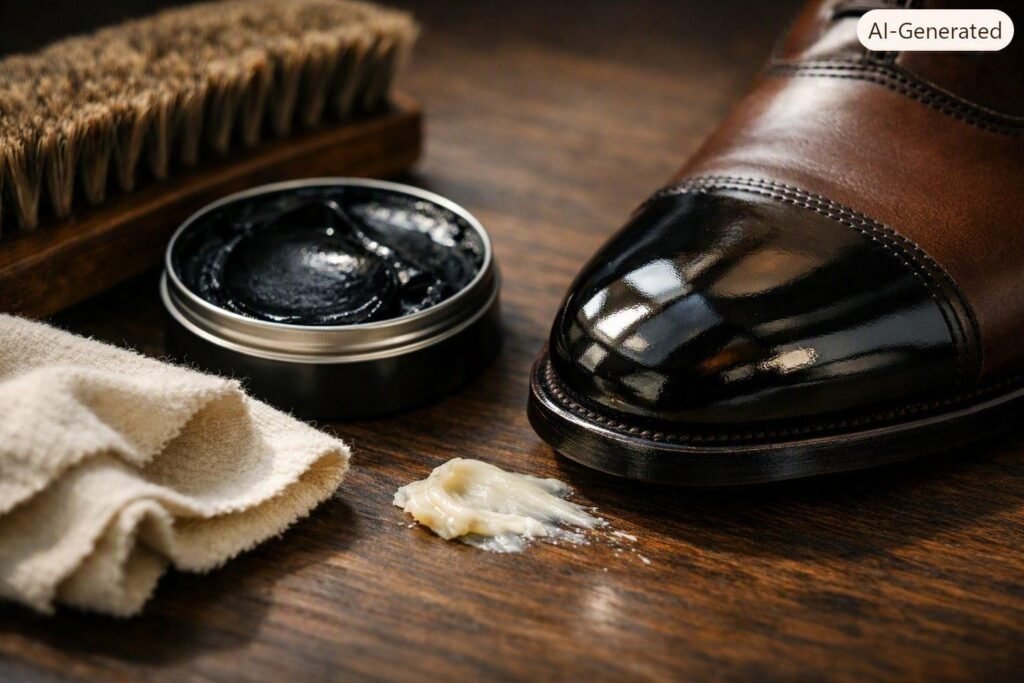
Polish is the heart of any starter kit, and you only need a small, focused palette to begin. Cream polishes condition and recolor, they soak into the leather, restore vibrancy, and lightly fill fine scuffs. Keep a black cream for black oxfords and derbies, one mid-brown cream that covers a surprising range of tan and brown shoes, and a neutral for nourishing without depositing pigment.
My go-to here is Saphir Pommadier cream polish.
Pommadier is my go-to for rich color and nourishment in a single step, one jar easily covers several pairs.
Wax polishes sit on the surface and build a harder, protective layer, ideal for toe caps and heel counters when you want a crisp, higher shine. A black and a brown cover most rotations; a neutral wax protects any color except black. Think of cream as food for the leather and wax as armor: cream every few weeks when shoes look dry, wax whenever you want extra gloss.
For wax, I reach for Saphir Pâte de Luxe.
Pâte de Luxe is still the benchmark wax for crisp, high-gloss toe caps on quality calfskin.
Brushes: The Engine of Your Shine
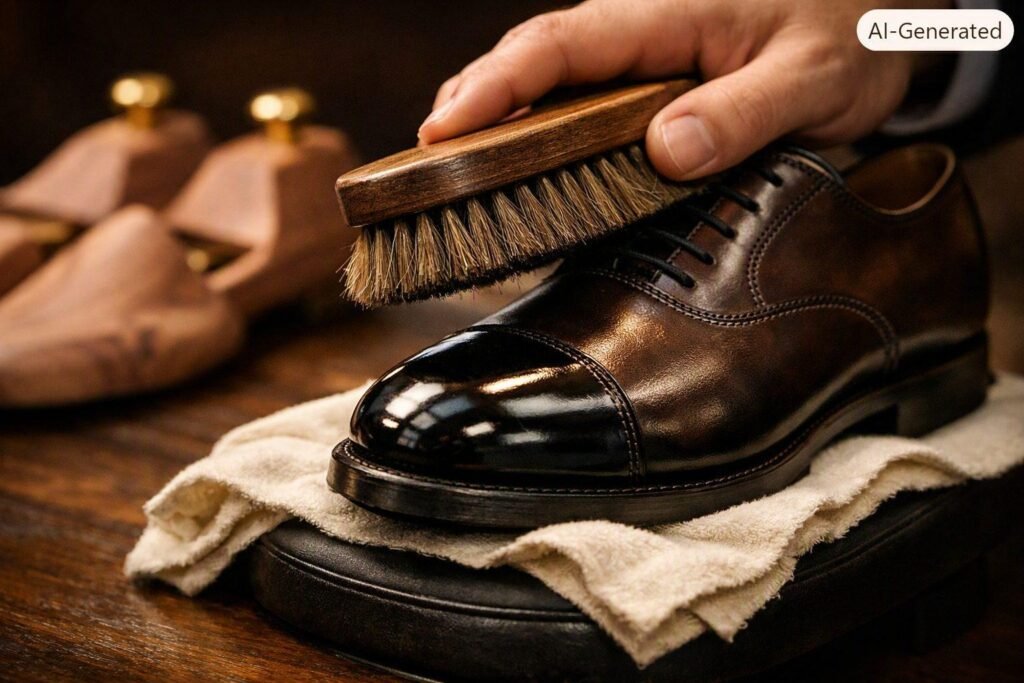
A horsehair brush is non-negotiable. The soft, flexible bristles remove dust and buff polish to a soft glow on smooth calfskin. One good full-size brush is enough to start, though many enthusiasts eventually add a second and dedicate them by color to avoid cross-contamination between black and brown. The rhythm is short, rapid strokes with light pressure, let the bristles kiss the leather until an even shine appears.
Cloths, Edge Dressing, and Water
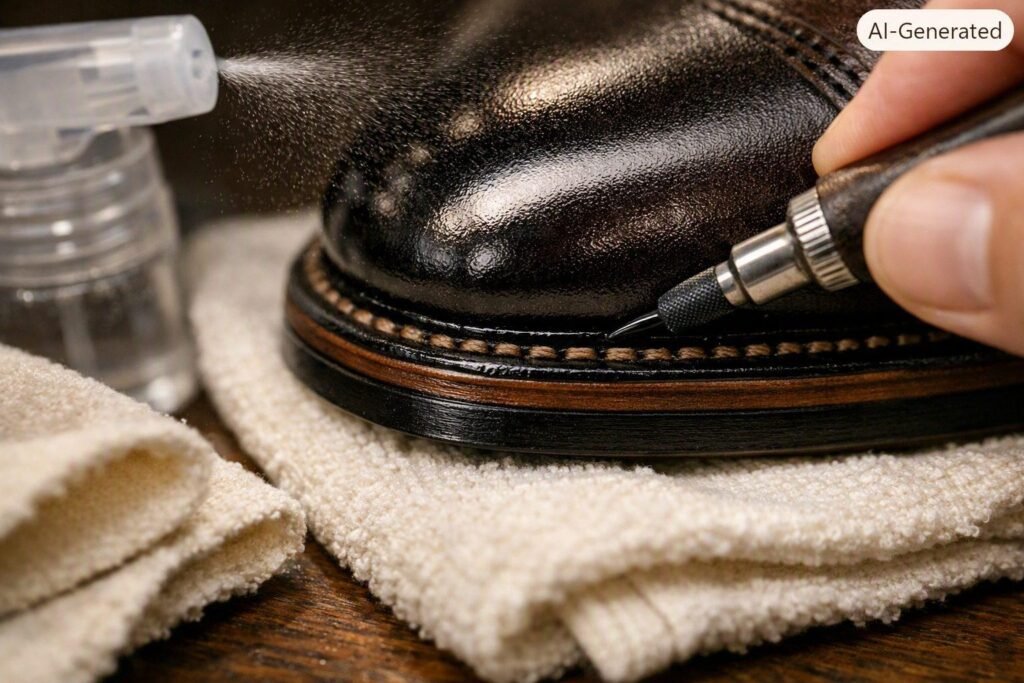
For cloths, a soft microfiber grabs surface dust for quick dusting and final buffing, while a dedicated buffing towel (or a very soft old cotton T-shirt) works cream and wax in and brings up gloss, it gets more effective as it loads with product. A lap towel or leather liner under your work catches splatter and keeps shoes from sliding as you polish.
Edge dressing in black and brown is a quiet upgrade that separates a polished shoe from a truly finished one. A thin coat recolors scuffed sole and heel edges; apply carefully along the welt and heel stack, let it dry, then brush off any excess for a crisp, inked outline. Finally, a simple spray bottle of clean water gives you control when building higher wax shines, a light mist emulsifies the wax so you can layer micro-thin coats rather than one cloudy layer. The key is restraint.
Shoe Trees: The Silent Workhorse
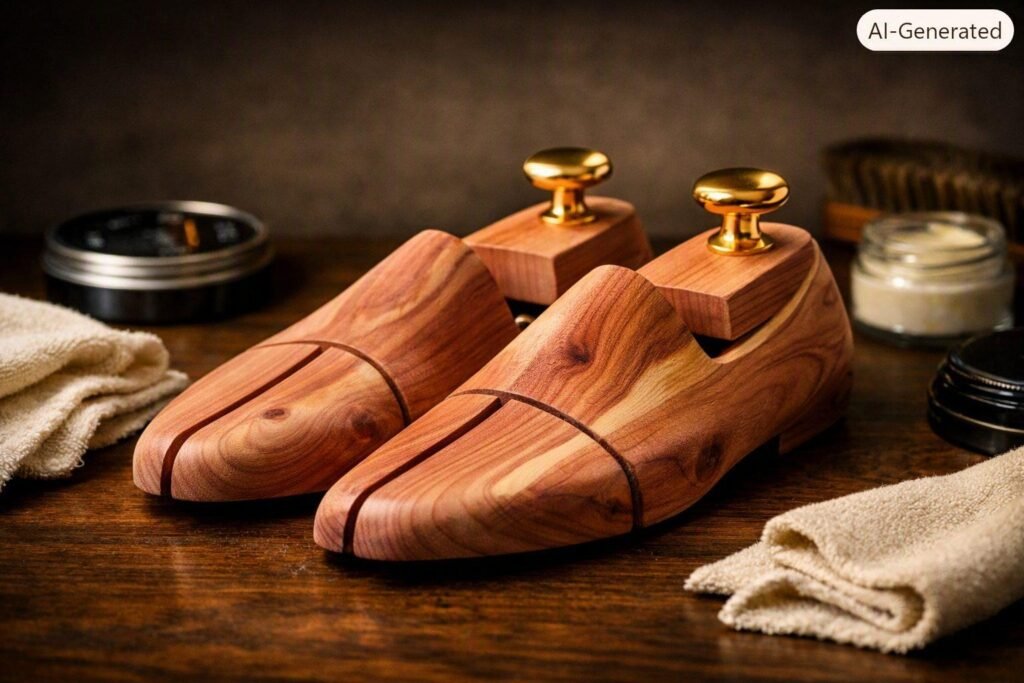
Cedar shoe trees may not feel like part of a care kit, but they are arguably the most important tool you can own. Inserted after each wear, they hold the shoe’s shape, reduce deep creasing across the vamp, and absorb moisture from the lining and insole, dramatically slowing premature cracking and collapse. They also make polishing easier: with trees in, the surface is smoother and more stable, so products go on more evenly. A solid pair of cedar shoe trees is worth prioritizing early.
A solid pair of cedar shoe trees is the single best long-term investment you can make in your dress shoes.
Suede Protector
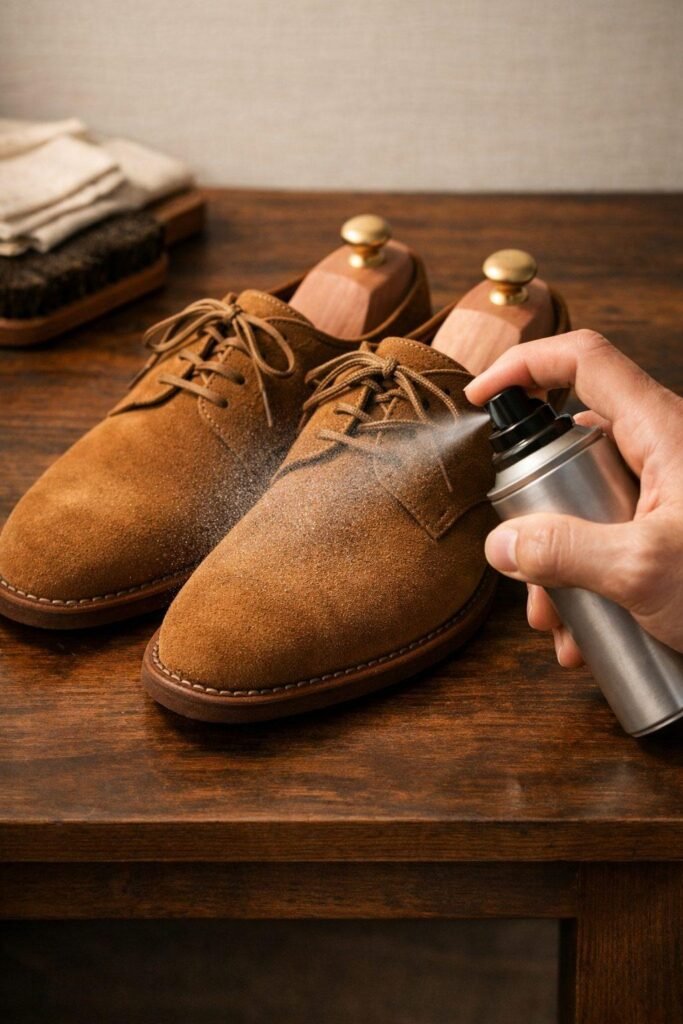
If your rotation includes suede or nubuck, a suede protector spray is essential. Applied to clean, dry suede, it deposits an invisible barrier that repels water, grime, and the occasional dropped drink. Used regularly, it keeps dirt near the surface so a quick brush is often all you need between deeper cleans. Spray in a well-ventilated area and let the shoes dry fully on trees before wearing.
Build Your Kit by Budget
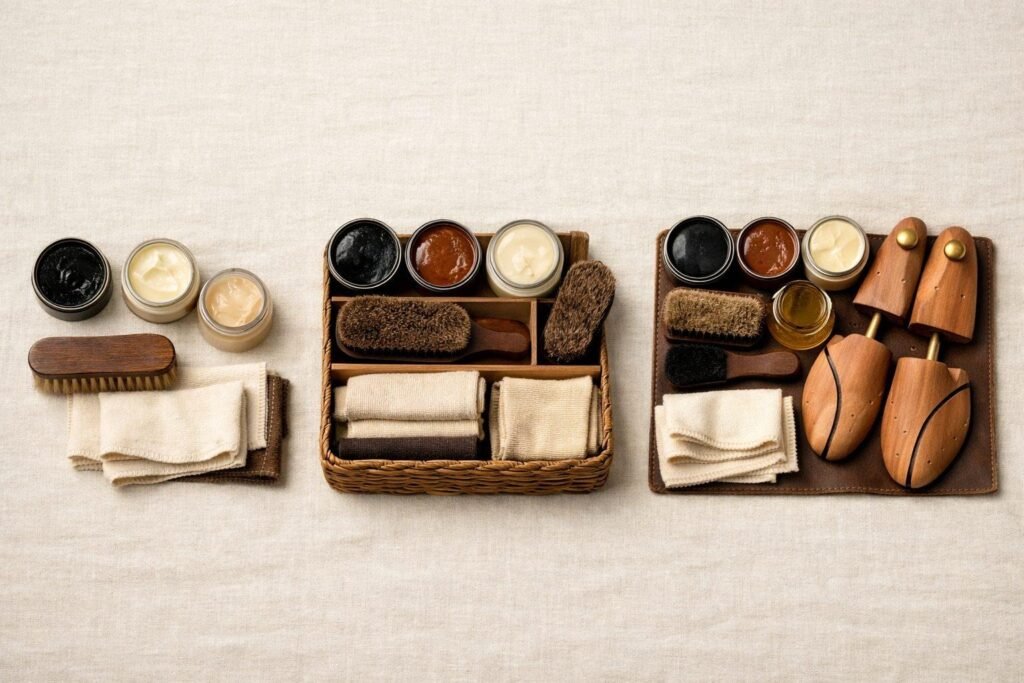
Every essential above maps to one of three investment levels. Each tier does the job, the difference is in the quality of ingredients and the longevity of results.
Tier 1, The Entry Kit (Under $60)
Your no-excuses starter. It covers every category with accessible products. You won’t be using the finest French waxes, but you’ll be caring for your shoes properly from day one.
| Item | Pick | Est. price |
|---|---|---|
| Storage box / basket | Simple wicker basket | ~$15–20 |
| Cream polish (blk/brn/neutral) | Kiwi or similar | ~$5–8 ea |
| Wax polish (blk/brn/neutral) | Kiwi Parade Gloss | ~$5–7 ea |
| Edge dressing (blk + brn) | Basic edge dye | ~$8–10 |
| Horsehair brush | Entry-level brush | ~$8–12 |
| Cloths + buffing towel | 3-pack microfiber | ~$6–8 |
| Spray bottle | Small plastic bottle | ~$2–3 |
| Shoe trees | Basic shoe trees | ~$10–15 |
| Suede protector | Drugstore suede spray | ~$8–10 |
Estimated total: around $50–65 (add a free old T-shirt as your lap towel).
Tier 2, The Enthusiast Kit ($100–160)
The sweet spot for most dress-shoe owners: higher-quality creams and waxes, better brushes, and proper cedar shoe trees.
| Item | Pick | Est. price |
|---|---|---|
| Storage | Wicker + DIY dividers | ~$20–25 |
| Cream polish (blk/brn/neutral) | Saphir Beauté du Cuir | ~$12–14 ea |
| Wax polish (blk/brn/neutral) | Quality wax | ~$11–16 ea |
| Edge dressing | Higher-quality edge | ~$18–22 |
| Horsehair brushes (x2) | Light + dark | ~$14–18 ea |
| Cloth + chamois | Dedicated cloths | ~$10–15 |
| Shoe trees | Cedar shoe trees | ~$20–25 |
| Suede protector | Premium suede spray | ~$20 |
Estimated total: around $120–155.
Tier 3, The Luxury Kit ($200–300+)
The full connoisseur build, premium conditioner, rich creams, dedicated mirror gloss, and top-tier cedar trees.
| Item | Pick | Est. price |
|---|---|---|
| Deep conditioner | Saphir Médaille d’Or Renovateur | ~$30 |
| Cream polish (blk/brn/neutral) | Top-tier cream | ~$25–30 ea |
| Wax polish (blk/brn/neutral) | Top-tier 100ml tins | ~$28–30 ea |
| Mirror gloss wax | Dedicated mirror gloss | ~$35–40 |
| Horsehair brushes (x2) | Large, dense brushes | ~$25–30 ea |
| Shoe trees | Split-toe cedar | ~$30–40 |
| Storage / suede / chamois | Premium finishing pieces | ~$60–95 |
Estimated total: roughly $220–310.
The conditioner I recommend at this tier is Saphir Médaille d’Or Renovateur, the same deep conditioner covered in Conditioning vs. Polish.
Prices approximate; checked July 2026 and subject to change.
Frequently Asked Questions
What is the most important item in a starter kit?
Cedar shoe trees. They hold shape, reduce creasing, and absorb moisture after each wear, dramatically slowing cracking and collapse.
Do I need both cream and wax polish?
Yes. Cream conditions and recolors by soaking in; wax sits on the surface and builds a protective, higher-shine layer. Together they look after both the health and the appearance of the leather.
Can I use a neutral cream on all my shoes?
On most colors except black. Neutral nourishes without adding much pigment and is ideal across several shades of brown or burgundy. For black, keep a dedicated black cream to restore depth.
How often should I polish?
A light brush and quick wax touch-up every few wears keeps leather sharp; a fuller cream-and-condition routine every four to six weeks suits regular wear. Heavy rotation or harsh weather may justify more.
The right kit is only the beginning, the routine is what makes shoes last. If you found this useful, subscribe and I’ll send each new guide as it publishes.
Get in Touch
Spotted a shoe worth examining, want to send a pair in for review, or have a correction? The Bespoke Sole is an independent editorial studio, and I read everything that comes in. Reach the studio here.
Lace up. Zip up. Slip in.