You finally invest in your first proper pair of dress shoes, maybe a sleek cap-toe oxford, an elegant penny loafer, or a versatile derby built to age well. Then checkout begins. Suddenly you are offered shoe trees, sprays, conditioners, brushes, insoles, and more. For a beginner, it can all feel like a coordinated effort to squeeze a little more money out of a major purchase.
Sometimes that instinct is right. Shoe accessories are one of the easiest places for retailers to increase the size of an order, and not every add-on deserves a place in your closet. But that does not mean the whole category is fluff. A small number of accessories play a real role in preserving shape, controlling moisture, and protecting leather from preventable damage over time.
That distinction matters because quality footwear is not meant to be treated like disposable fashion. Better shoes are built with the expectation that they will be cared for, rested, and maintained. The question is not whether accessories exist to sell more product. Of course some do. The better question is simpler: which accessories genuinely improve longevity, and which ones are mostly situational, cosmetic, or unnecessary?
For a beginner, that is the right lens. Instead of buying everything that appears at checkout, learn to separate structural essentials from optional extras. Once you do, the category becomes much easier to navigate.
Why Longevity Changes the Conversation
Most people are used to thinking about shoes as short-term purchases. Wear them hard, accept the creasing, ignore the moisture, and replace them when they start to look tired. That approach may be normal in lower-cost footwear, but it misses the point of better dress shoes entirely.
A properly made pair is designed for a longer life. In many cases, the upper is capable of outlasting the original sole by years, provided the shoe is cared for well and repaired before neglect turns small issues into permanent damage. That is why the real value of quality footwear is not just in how it looks out of the box. It is in how well it can continue to look, feel, and perform after repeated wear.
This is where cost per wear becomes useful. A pair that holds its shape, keeps its structure, and avoids premature leather failure can remain attractive and serviceable for far longer than a neglected pair. Longevity is not only about saving money. It is also about preserving fit, comfort, appearance, and the overall experience that made the shoe worth buying in the first place.
To get there, a shoe needs help in a few predictable areas. Leather needs to stay nourished and flexible. The interior needs time to dry between wears. The shape of the upper and heel needs to be protected from daily abuse. The accessories that matter are the ones that address those needs directly.
The Decision Test: Upsell or Essential?
A useful way to judge any shoe accessory is to ask one simple question: does this product solve a real wear problem that predictably shortens the life of the shoe?
If the answer is yes, you are probably looking at an essential or near-essential item. If the answer is no, the accessory may still be convenient or enjoyable, but it belongs in the optional category. For beginners, that test can be broken into three filters.
Does it protect structure?
Anything that preserves the shape of the upper, supports the heel counter, or reduces damaging stress on core components deserves attention. Once structure is lost, shoes often feel worse and look worse, even if the leather and sole are otherwise intact.
Does it manage moisture?
Moisture is one of the most overlooked threats to shoe longevity. Sweat accumulates inside the shoe, linings stay damp longer than most people realize, and repeated wear without proper drying speeds up breakdown. Products that help the shoe dry properly can do real work.
Does it nourish the leather?
Leather does not stay healthy by accident. It bends, flexes, and dries out over time. Accessories that keep leather supple and less prone to cracking are usually worth serious consideration.
If an accessory does none of those things, it is more likely to be an upsell, a style enhancer, or a niche-use product rather than a true longevity essential.
The Essentials, Compressed
For beginners, the core list is short.
Cedar shoe trees
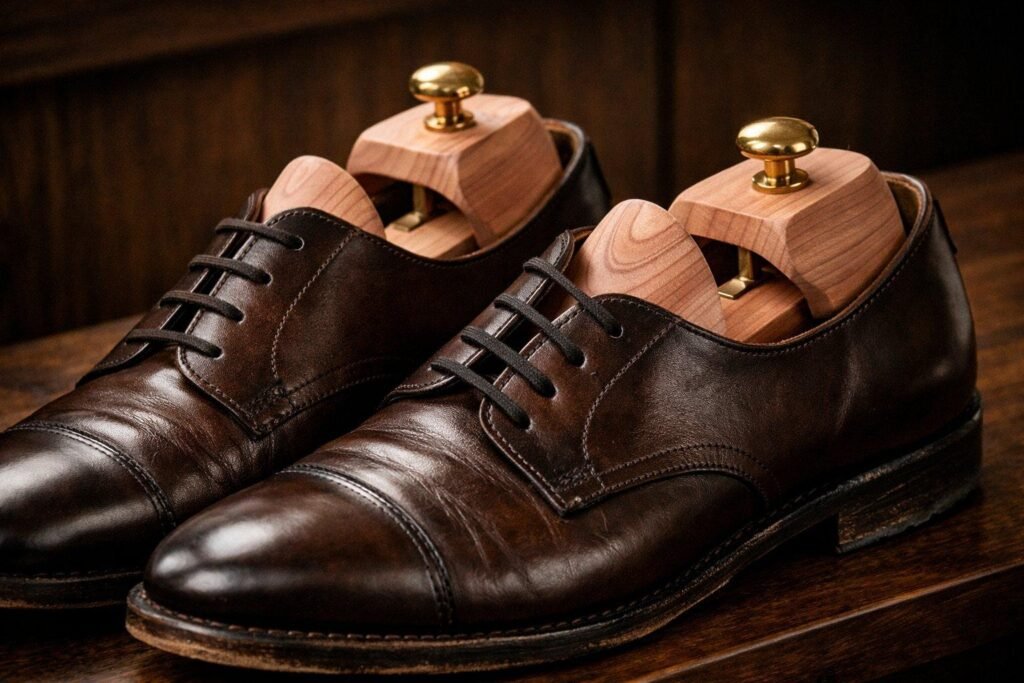
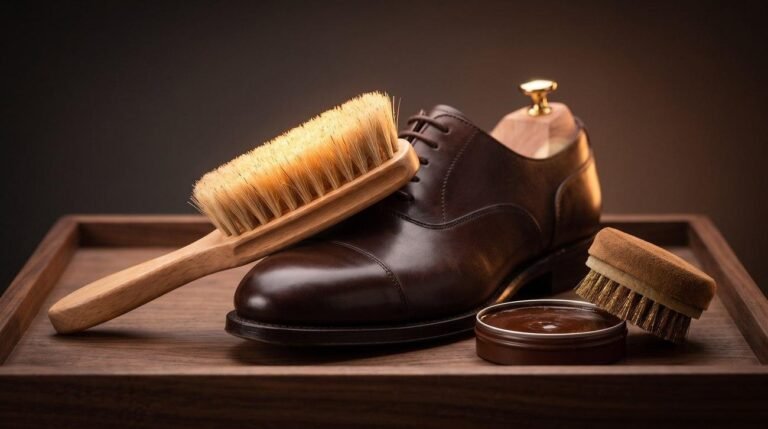
Cedar shoe trees help the shoe hold its shape after wear while also assisting with moisture management inside the shoe. They are one of the clearest examples of an accessory that earns its place because they address two of the main causes of visible aging: collapsing shape and lingering interior dampness. For sizing and specific picks, see our The Ultimate Shoe Care Starter Kit (3 Budgets).
Shop the cedar shoe trees on Amazon
Shoe horn
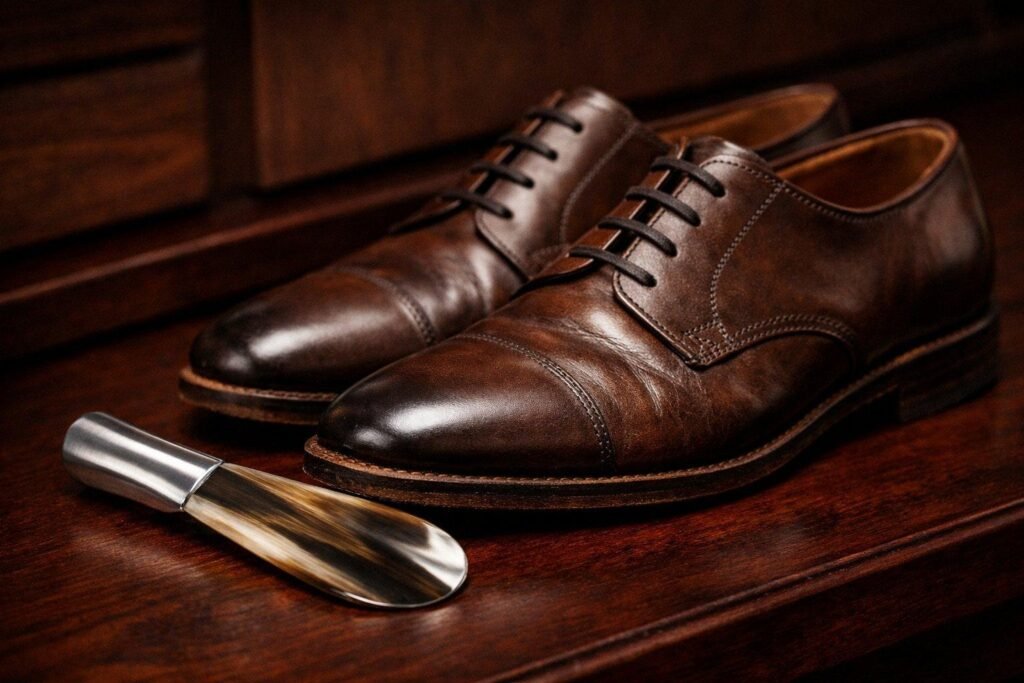
A shoe horn protects the heel counter by reducing the friction and crushing force that comes from forcing the foot into the shoe. That sounds minor until you see how many otherwise good shoes become sloppy at the heel long before the sole is finished. For beginners, it is less about tradition than prevention.
Neutral leather conditioner
A neutral leather conditioner helps keep leather supple so it can flex without drying into stiffness and cracking. This is one of the few accessories that directly supports material health rather than just appearance. For product choice, application method, and how often to condition, see our How to Treat New Leather Shoes Before the First Wear guide.
Shop the leather conditioner on Amazon
Where the Upsell Question Gets Interesting
The strongest shoe-care advice is rarely absolutist. Some accessories are neither obvious essentials nor obvious gimmicks. Their value depends on material, climate, usage, and fit. That is where beginners need judgment more than shopping enthusiasm.
Waterproofing Sprays: Useful, but Not Universal
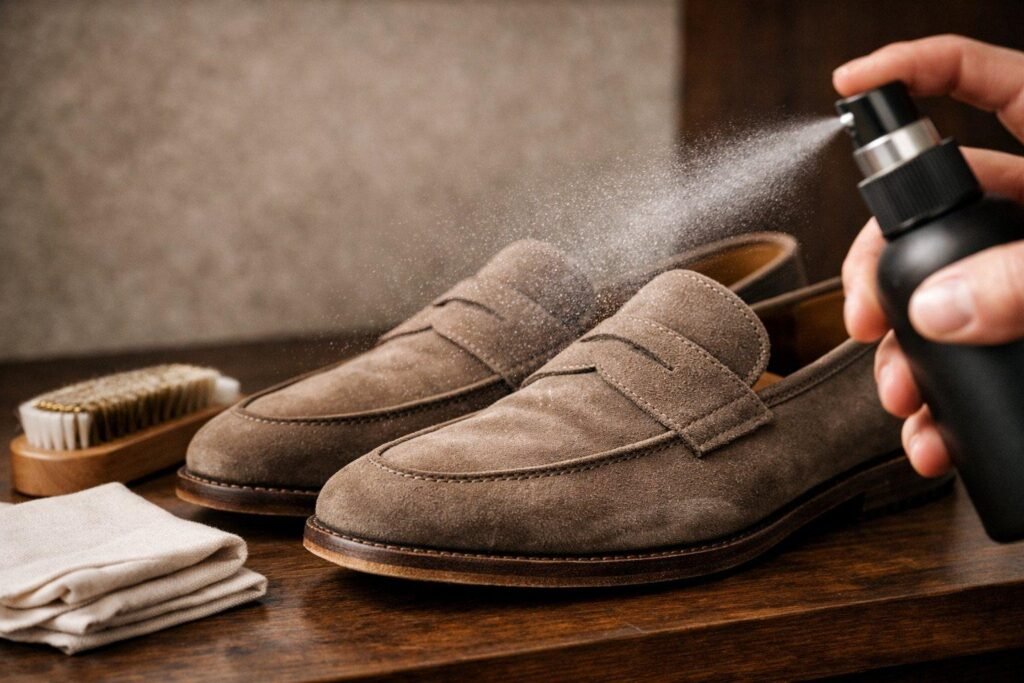
Waterproofing spray is one of the most common add-ons at checkout, which is part of why so many buyers distrust it. The reality is more nuanced.
On suede, nubuck, and many fabric-heavy uppers, a good waterproofing product can be genuinely useful. Those materials are often more vulnerable to staining, spotting, and moisture-related damage, and a protective layer can make daily wear much easier to manage. In that context, the spray is not just a retail add-on. It can be a practical protective step.
Smooth leather is where the conversation becomes more careful. Some practitioners caution against relying too heavily on waterproof sprays for regular smooth leather dress shoes, especially when those shoes already benefit from cream and wax-based care. The concern is not that water protection itself is bad, but that overapplication or the wrong product can work against a more balanced leather-care routine. For beginners, the safest position is moderation: treat waterproofing as material-specific rather than universal.
That even-handed approach matters. If your first good pair is suede loafers and you live in a wet climate, a spray may be a smart purchase. If your first good pair is smooth calfskin oxfords, it may be something you use sparingly, selectively, or not at all. The mistake is not buying or skipping spray. The mistake is assuming every shoe needs the same treatment.
Insoles and Heel Grips: Comfort Tools, Not Longevity Tools
Insoles and heel grips are often sold in the same breath as care essentials, but they belong in a different category. They may solve comfort issues, fit issues, or both, but they do not automatically extend the life of the shoe.
That does not make them useless. Someone with a genuine comfort need, support issue, or fit challenge may benefit from an insert or a corrective accessory. The problem is when these products are framed as a universal finishing touch for every shoe purchase. They are not.
For dress shoes in particular, aftermarket inserts can alter how the shoe fits, sometimes crowding the instep or changing the way the foot sits inside the last. Heel grips can occasionally help at the margins, but they are often compensating for a deeper fit issue rather than solving one. In other words, these products may improve wearability for some people, but they should not be confused with the accessories that preserve structure and materials over time.
For beginners, the rule is straightforward: if an insert solves a comfort problem, use it intentionally. But do not buy one under the assumption that it is part of a standard longevity routine.
Rotation: The Most Underrated Essential
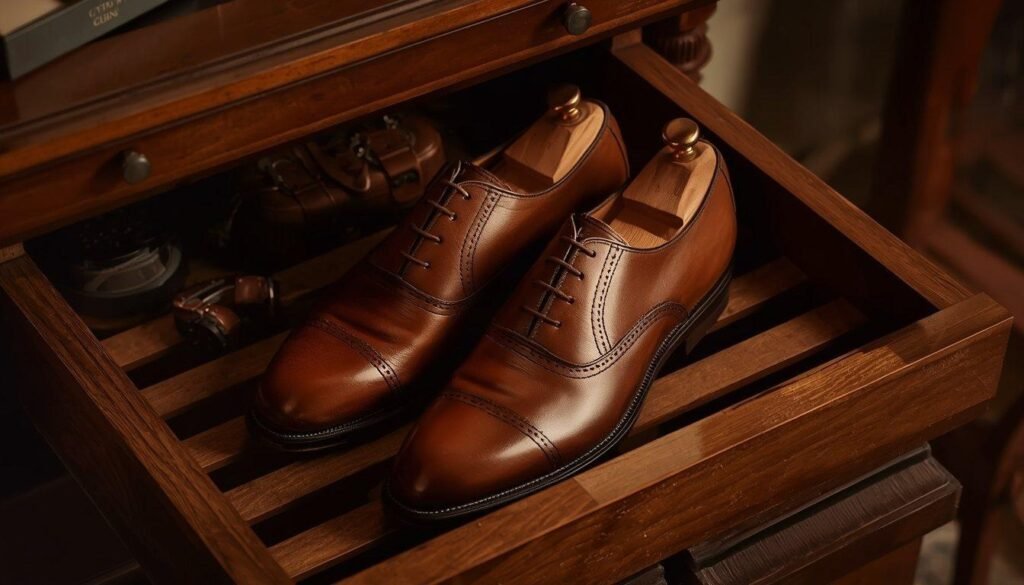
If there is one longevity habit beginners overlook, it is rotation.
The most effective way to shorten the life of a good pair of shoes is to wear it day after day without giving it time to recover. Every wear introduces heat, moisture, and compression. The upper flexes. The interior absorbs sweat. The insole and lining hold onto that moisture longer than you might expect. The shoe does not magically reset overnight if it is immediately put back into service.
Rotation changes that. When a pair gets a full day or more to rest, the interior has time to dry more completely, the shape benefits from time on shoe trees, and the materials are not being stressed in the same repetitive pattern every day. That rest period is not an indulgence. It is part of how good shoes stay healthy.
This is also why accessories alone cannot do the entire job. A cedar shoe tree inserted into a shoe that is worn hard again the next morning helps, but only up to a point. The real payoff comes from combining trees with time off the foot. For beginners, owning two pairs and rotating them often does more for longevity than buying a long list of care products for one pair that gets worn every single day.
That is the hidden truth in the upsell-versus-essential conversation. Some of the most effective preservation habits are not glamorous at all. They are slow, repetitive, and easy to ignore. But they work.
A Beginner Routine That Actually Holds Up
If the category feels crowded, simplify it. A longevity-minded beginner does not need a cabinet full of specialty products. A workable routine can stay small and still be effective.
After each wear, insert shoe trees and let the pair rest. Use a shoe horn every time the shoes go on. Keep the leather clean enough that dust and grime do not sit on the surface indefinitely. Condition on the cadence laid out in our Conditioning vs. Polish guide rather than on impulse or a rigid internet schedule. And whenever possible, rotate rather than repeating the same pair on consecutive days.
That routine is intentionally modest. It avoids turning shoe care into a hobby requirement while still covering the main risks that shorten a shoe’s useful life. The goal is not perfection. The goal is consistency.
Closing
So, are shoe accessories upsells or essentials?
Some are obvious upsells. Some are useful only for certain materials or fit problems. But a small core group earns the label of essential because it helps the shoe keep its shape, recover from wear, and avoid premature damage. That is the standard that matters.
For a beginner, the smartest move is not to buy everything. It is to understand what each accessory is actually doing. Once you know that, the category stops feeling like retail pressure and starts feeling like preventive maintenance.
Get in Touch
Spotted a shoe worth examining, want to send a pair in for review, or have a correction? The Bespoke Sole is an independent editorial studio, and I read everything that comes in. Reach the studio here.
Lace up. Zip up. Slip in.