If you’re getting serious about men’s dress shoes, learning the parts of a shoe is one of the best upgrades you can make. When you know what terms like vamp, quarters, welt, and shank actually mean, product pages suddenly make more sense, sales talk is easier to decode, and you can tell at a glance whether a pair is truly worth the price.
At The Bespoke Sole, we see shoe anatomy as your secret decoder ring. Once you understand how a dress shoe is built, you can buy smarter, get a better fit, and build a rotation that looks sharper and lasts longer.

What “Shoe Anatomy” Really Means (and Why You Should Care)
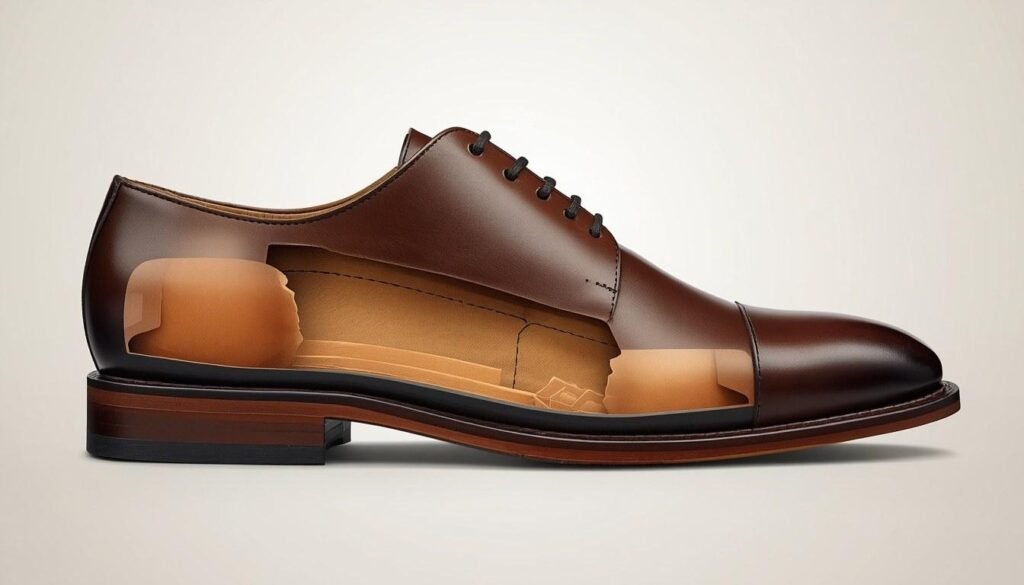
“Shoe anatomy” is just the language for all the individual parts that make up a men’s dress shoe. Some you can see (the vamp, quarters, and toe box), while others are hidden inside, like the shank and toe puff. Every one of these parts helps determine how the shoe fits, how it feels underfoot, how long it lasts, and how refined it looks as it ages.
Most classic leather dress shoes are built around three main systems:
- The upper (everything above the sole)
- The sole and heel (everything that meets the ground)
- The hidden support structure (everything in between)
Once you know how each system works, you’re no longer just buying “a nice pair of shoes.” You’re choosing construction, comfort, and longevity on purpose.

The Upper: Where the Style Lives
The upper is the entire section of the shoe above the sole, and it’s where most of the visual personality lives. It’s the part you notice first: the shape, the lines, the way the leather creases over time.
Vamp: The Part That Creases When You Walk
The vamp is the front part of the shoe that covers your forefoot and runs back toward the laces. It’s the area that flexes every time you take a step, which is why the leather and fit here are so important. High-quality calfskin will develop those clean, shallow creases you see on well-kept dress shoes, while cheaper leather tends to wrinkle deeply and collapse.
When you try on a pair, look closely at the vamp. If it feels too tight across the ball of your foot ▸ INTERNAL LINK to “The Comprehensive Dress Shoe Width Guide” or creases sharply the moment you walk, that last probably isn’t right for you.

IMAGE 3 | Position: End of “Vamp”. File: shoe-anatomy-03-vamp.jpg. Alt text: Close-up of vamp on brown leather Oxford showing natural creasing, dress shoe vamp detail
Quarters: What Makes an Oxford an Oxford
Behind the vamp are the quarters: the side and back panels that wrap around your heel and extend forward to meet the lacing area. This is where one of the biggest style distinctions comes from:
- In a closed-lacing Oxford, the quarters sit under the vamp, creating a clean, tight lacing line that feels formal and sleek.
- In an open-lacing Derby, the quarters sit on top of the vamp, opening wider across the instep for a more relaxed, adjustable fit.
Once you know what the quarters are doing, you’ll never confuse an Oxford and a Derby again, even if the product description is vague.

Toe Box and Toe Cap: Shape, Space, and Profile
At the very front of the shoe, you’ve got the toe box, the three-dimensional space your toes live in. Sometimes it’s reinforced with a toe cap, an extra piece of leather stitched across the front for added structure and, in some designs, decorative broguing.
A good toe box does two things at once: it gives your toes room to breathe and protects the overall shape of the shoe. If it’s too tight or too low, you’ll feel pressure on your toes and see the leather collapse into an unflattering shape over time.
Tongue, Throat, and Heel Counter: The Unsung Comfort Heroes
The tongue is the strip of leather under the laces that protects the top of your foot from pressure and helps keep debris out. The throat is the opening where the lacing starts, and its depth affects how easy the shoe is to get on and how it grips your instep.
Inside the back of the shoe is the heel counter, a stiff internal piece that cups your heel and keeps everything locked in. A good heel counter gives you that secure, “held” feeling without digging into your Achilles or rubbing your skin raw.
The Bottom: What You Feel Underfoot
Now let’s flip things over, literally. The bottom of the shoe is all about how the pair feels when you stand and walk, and how it handles real-world surfaces.
Insole: The Part Your Foot Actually Touches
Inside the shoe, the insole (or footbed) is the layer your foot rests on. In better-quality men’s dress shoes, this is usually made from leather that slowly molds to your footprint with wear. That’s why a good pair often feels better after a few outings than it did straight out of the box.
If you’ve ever had a pair that “broke in” and suddenly felt custom, the insole is a big part of that story.
Welt: The Signature of Serious Construction
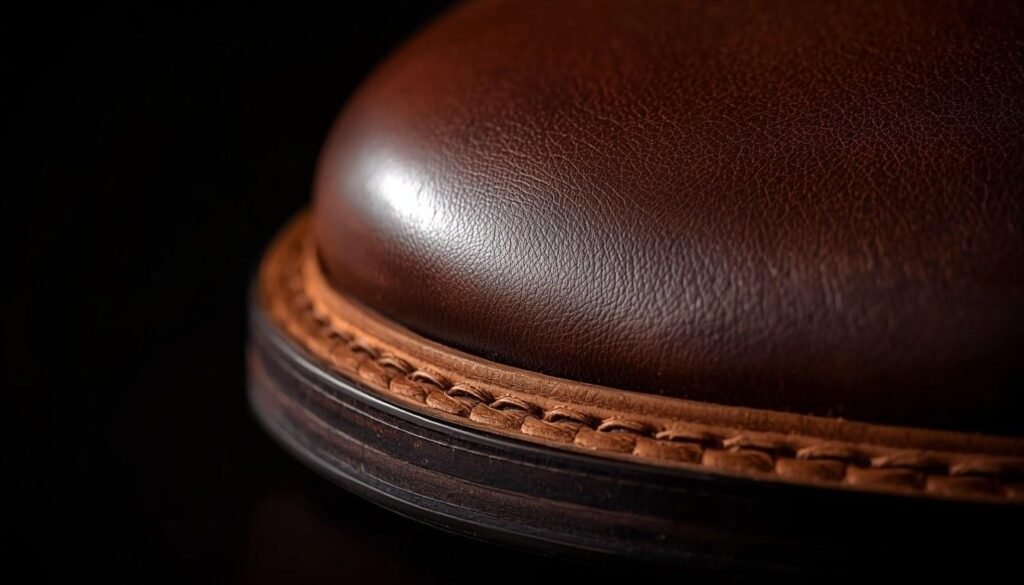
Between the upper and the outsole, you’ll find the welt, a narrow strip of leather that runs around the perimeter of the shoe. In a Goodyear-welted shoe ▸ INTERNAL LINK to “Goodyear Welt vs Blake Stitch” , the upper and insole are stitched to this welt, and the outsole is stitched separately into it. This creates a strong, water-resistant connection that can be resoled multiple times, which is a big reason Goodyear-welted shoes are respected among enthusiasts.
Once you know how to spot a welt and see the stitching, you can quickly tell whether a shoe is built to be resoled or built to be replaced.
Outsole: The Layer That Meets the Ground
The outsole is the bottom layer that actually touches the ground, and it answers a common question: what is the bottom of a shoe called? Most people simply say “the sole,” but outsole is the precise name. Traditional leather outsoles give you that sleek profile and satisfying “click” on hard floors, perfect for more formal settings. Rubber outsoles ▸ INTERNAL LINK to “Leather Sole vs Rubber Sole” or hybrid leather-and-rubber designs offer better grip and weather resistance, which helps in rain, snow, or on slick city sidewalks.
Neither is “right” or “wrong.” It just depends on your lifestyle and where you’ll actually wear the shoes.
Heel and Top Lift: Height, Balance, and Wear
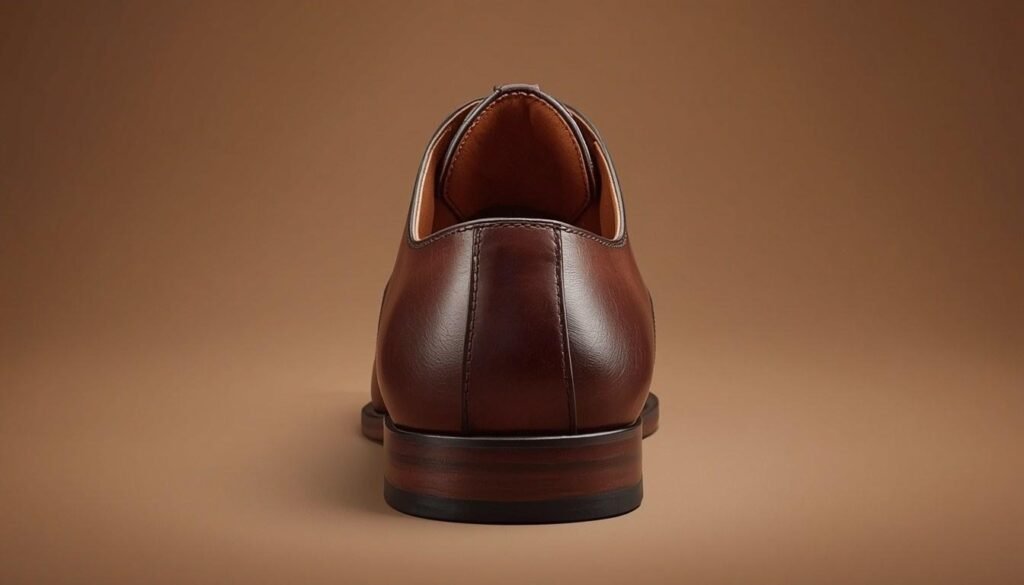
Under your heel, stacked layers of leather or rubber create the heel block, giving you a bit of lift and balancing the shoe visually. At the very bottom of that heel stack is the top lift (or heel cap), a harder, replaceable piece that takes most of the impact when you walk.
That top lift is meant to wear down over time and then be replaced, which is a simple repair that can add years of life to the shoe.
The Hidden Structure: What You Don’t See (But Definitely Feel)
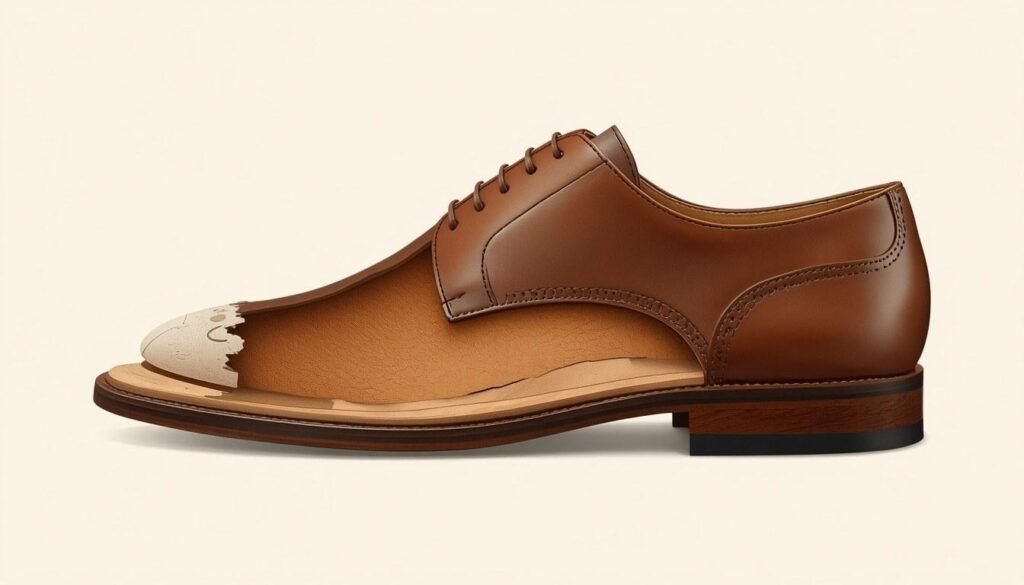
Some of the most important parts of a quality dress shoe are invisible from the outside. They’re buried in the middle of the shoe, quietly doing their job every time you take a step.
Shank: The Spine of the Shoe
Sitting between the insole and outsole is the shank, the “spine” of the shoe under your arch. It’s usually made from steel, leather, or fiberglass, and its job is to control how the shoe flexes. A good shank stops the shoe from bending in half at the arch and instead focuses the flex at the ball of your foot where it should be.
If you pick up a shoe and try to fold it like a taco, a quality pair will only bend at the forefoot and stay firm in the middle. That’s the shank doing its work.
Toe Puff and Heel Counter: Keeping the Shape
Up at the front, the toe puff reinforces the toe box so the shoe keeps its shape rather than collapsing as the leather softens. At the back, the heel counter teams up with the shank to keep your heel stable and the rear of the shoe crisp and structured.
You may never see these pieces, but you absolutely feel the difference between a shoe that has them and a shoe that doesn’t, especially after a full day on your feet.
Parts of a Shoe: Your Quick Cheat Sheet
- Vamp: Front part covering the forefoot.
- Quarters: Side and back panels of the upper.
- Toe Box: Space around the toes at the front of the shoe.
- Heel Counter: Internal heel support that holds shape.
- Welt: Strip joining the upper to the sole (key in Goodyear-welted shoes).
- Outsole: Bottom layer that touches the ground.
- Heel: Rear support under the foot, built from stacked layers.
- Shank: Hidden support under the arch, the shoe’s “spine.”

How to Use This Knowledge When You Shop
At The Bespoke Sole, we run through this anatomy checklist every time we review a luxury dress shoe. You can do the same thing in a store or at home: look at the vamp and how it creases, check how the quarters attach (Oxford or Derby), inspect the welt and outsole, and feel how supportive the shank and heel structure are when you walk.
Once you’re fluent in the language of vamp, quarters, welt, and shank, you stop guessing and start evaluating. That’s how you build a rotation that not only looks better on your feet, but fits better, feels better, and ages beautifully with proper care.

Frequently Asked Questions
What are the main parts of a shoe called?
A men’s dress shoe has three groups of parts. The upper includes the vamp, quarters, toe box, tongue, and heel counter. The bottom includes the insole, welt, outsole, and heel. The hidden structure includes the shank and toe puff. The cheat sheet above gives a one-line definition of each.
What is the bottom of a shoe called?
The bottom of a shoe is called the outsole, often shortened to the sole. It is the layer that touches the ground. On a dress shoe it is usually leather, rubber, or a combination of the two, with the heel stacked at the back.
What is the difference between the sole and the outsole?
In everyday speech they mean the same thing. Strictly speaking, “sole” can describe the whole bottom of the shoe, while “outsole” is the outer layer that meets the ground. On a Goodyear-welted shoe the outsole is stitched to the welt, which is why a good cobbler can replace it.
Lace up. Zip up. Slip in.
The Bespoke Sole
What are the main parts of a shoe called?
A men’s dress shoe has three groups of parts. The upper includes the vamp, quarters, toe box, tongue, and heel counter. The bottom includes the insole, welt, outsole, and heel. The hidden structure includes the shank and toe puff. The cheat sheet above gives a one-line definition of each.
What is the bottom of a shoe called?
The bottom of a shoe is called the outsole, often shortened to the sole. It is the layer that touches the ground. On a dress shoe it is usually leather, rubber, or a combination of the two, with the heel stacked at the back.
What is the difference between the sole and the outsole?
In everyday speech they mean the same thing. Strictly speaking, “sole” can describe the whole bottom of the shoe, while “outsole” is the outer layer that meets the ground. On a Goodyear-welted shoe the outsole is stitched to the welt, which is why a good cobbler can replace it.