I ran my own dream commission through the exact bespoke process I recommend to every reader, then priced, timelined, and specified it in full, even though I’m not buying it myself.
I tell people constantly to slow down before they buy a pair of shoes. Ask what the shoe is actually for. Ask what the leather does under real wear. Ask whether “custom” on a product page means anything at all. I wanted to test that advice honestly, and the honest way to do it wasn’t to write a check I can’t cash. It was to run my own dream pair through the exact consultation process I hand to every reader who emails asking where to start, and see what came out the other end.
What came out is Midnight Formal Power: a complete bespoke design, priced and timelined the way a real independent workshop would price and time it. I have not commissioned this shoe. At $7,000 to $8,800, I’m not going to pretend I’m about to. What follows is the design in full: the brief, the decisions, the real numbers, and at the end, the exact specification, in case you’re the reader who can actually walk into a maker and order it.
Custom, Bespoke, and the Words in Between
Every men’s shoe brand on the internet uses the word “custom” now. Pick a sole color, add your initials, call it a day. That’s not nothing, but it isn’t bespoke, and treating the two words as interchangeable is how people overpay for the wrong thing.
There are four real tiers, and knowing which one you’re buying matters more than any leather swatch. Ready to wear is a shoe made in a standard size and held in stock, waiting for a foot that’s close enough. Made to order lets you customize a house’s existing range: a different leather, a different sole, a different stitch, but the elements that are customizable there all sit downstream of a last you didn’t choose. Made to measure adapts that same house last to your specific measurements, which closes the gap considerably. Bespoke starts over entirely: there is no house last. A maker traces your foot and hand-carves a wooden last that belongs to no one else on earth, then builds the shoe around it from the first cut, a genuinely handmade shoe in the oldest sense of the word.
“Would John Lobb do this?” That’s the question I ask myself before every design decision on this site.
I chose full bespoke for this pair, not because it’s always the right call (it isn’t, and I’ll get to that), but because the shoe I had in mind needed a last that didn’t exist yet.
The Brief Comes Before the Leather
Every bespoke commission I recommend starts with a written brief, not a leather sample. Before I let myself think about color, I answered the same questions I’d ask any reader: who is this pair for, what will you wear it with, and what impression should it make when you walk into a room.
My answers were specific on purpose. This pair is for me, built for formal events and black-tie occasions, worn with navy tailoring and black-tie attire rather than chinos or denim. I wanted an impression that read as authoritative and elegant: not loud, not costume-vintage, not trying too hard. I’m a true size 11, right foot dominant, with a normal arch and a medium-width forefoot noted for the maker to build around, and I gave my usual sizing in a Bally last as a reference point. I wear medium-weight dress socks with a shoe like this, which matters more than people think. A last built around the wrong sock thickness never sits right, no matter how good the leather is.
The Comprehensive Dress Shoe Width Guide: Sizing, Fit & Brands
None of that is glamorous. All of it is the part people skip, and it’s the part that decides whether a five-figure shoe actually fits.
The Design: What Midnight Formal Power Actually Is
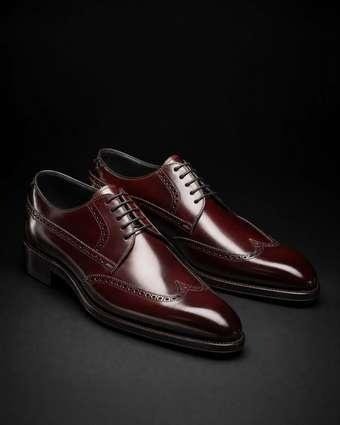
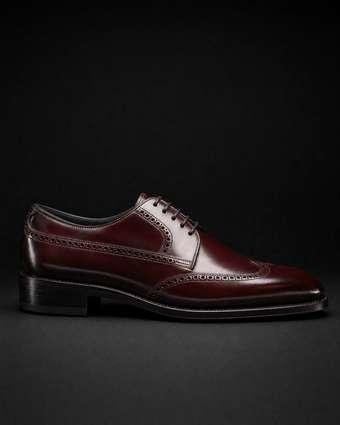
Once the brief was locked, the design followed logically instead of emotionally. This is a hand-welted, full-brogue Derby: a longwing wingtip pattern with a level of broguing that reads as formal rather than sporty once it’s built in burgundy shell cordovan instead of ordinary calf.
Goodyear Welt vs Blake Stitch: Which One Actually Ages Better?
Shell cordovan is not a casual decision. It’s a dense, non-porous leather that takes years to develop the kind of roll and shine that make an old cordovan shoe look better used than new. Paired with a black calf lining and a leather sole finished with a dark, antiqued edge, the whole shoe reads as a serious dress shoe built for a black-tie room, not a boardroom. A 30mm formal heel and a hidden layer of rubber protection at the tip keep it wearable on real city streets without looking like it. Black round waxed laces close it out. Nothing about the design is loud, and that was the point.
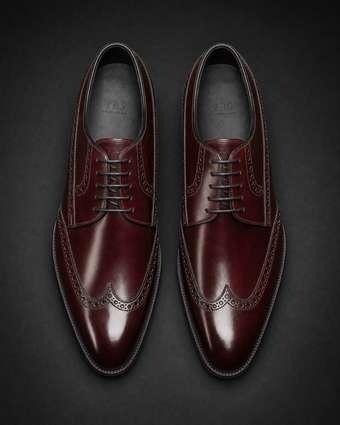
Look closely at the top-down shot and you’ll see the brogue pattern run clean across both the toe and the wing, and the “TBS” mark worked discreetly into the insole, tone-on-tone, no ink, the kind of detail a good maker builds in rather than stamps on afterward.
What It Actually Costs (and Why the Number Moves)
I’m not going to pretend bespoke is affordable, because it isn’t, and any article that tells you otherwise is selling something. A sensible planning budget for a pair built to this exact specification, hand welt, custom last, shell cordovan, full brogue, one trial-fitting round, lands between $7,000 and $8,800 before tax and shipping, with a wider realistic range of $5,750 to $10,100 depending on the maker’s market, whether the last is billed separately, and how many fitting rounds it actually takes to get right.
That range breaks down roughly into nine line items: the consultation and foot assessment, the custom last itself, the trial shoe and fitting correction, the shell cordovan allocation, the hand-welted build labor, the heel and sole assembly, the lining and internal finishing, the branding and sole work, and final quality control and packing. Most reputable independent makers stage payment in thirds: roughly half at order and last development, a quarter after the trial fit is approved, and the final quarter before the shoe ships.
Never cut the budget by skipping the trial shoe or the fit correction round. If money is tight, cut the cosmetic extras (a simpler stamp, less elaborate packaging) before you touch the fitting process. A beautiful shoe that doesn’t fit is an expensive coaster.
The Timeline: Nine Months Is Normal
A realistic bespoke timeline runs 30 to 38 weeks from completed measurement to delivery (call it seven to nine months), and treating that as a soft estimate rather than a promise will save you a lot of frustration. A best-case scenario, with a maker working locally, shell already in stock, and no correction needed after the trial fit, can land in 24 to 28 weeks. A more conservative case, involving remote fittings, international shipping, a second round of revisions, or a hard-to-match shell, can stretch to 40 to 48 weeks.
Roughly, the process runs like this: measurement and design lock in the first two weeks, last development over the following month, a trial shoe and first fitting around week six to ten, corrections through week thirteen, material preparation and cutting through week seventeen, the hand-building of the shoe through week twenty-five, finishing and identity details (antiquing the sole edge, blind-embossing the branding, inspecting the brogue work) through week twenty-nine, then final quality control, dispatch, and a built-in schedule reserve for the inevitable customs delay or seasonal backlog.
The Mark of the Maker
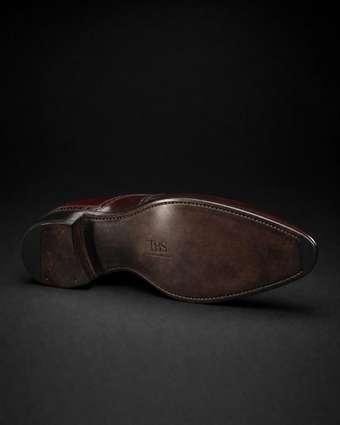
The last piece of any bespoke commission is the part nobody sees until you take the shoe off: the sole. This design calls for a discreet blind emboss: the TBS wordmark, tone-on-tone, no visible ink, and a hand-written commission number on the insole, marking exactly when a real pair would be made. It’s a small thing, and it isn’t really about the brand at all. It’s the entire argument for bespoke in one detail: nobody hand-writes a date into a factory shoe for a customer only they will ever see it.
The Honest Part
Bespoke isn’t the right answer for most shoe purchases, and I’m not going to pretend this one is for me. Not at $7,000 to $8,800. I designed Midnight Formal Power because I wanted to run the whole process honestly, start to finish, the same way I ask every reader to: brief first, design second, price and timeline last, no skipping ahead to the leather because it’s the fun part. What I got back is a shoe I’d wear without hesitation and a bill I’m not writing this year.
If you’re in a different position than I am, or you’ve been saving for exactly this kind of pair, the full specification is later in this document, ready to hand to a maker. Every measurement, material, and construction detail in this article is real enough to order against; none of it is placeholder language. Adjust the sizing and fit notes to your own foot, take it to an independent bespoke workshop, and you’ll be commissioning the same shoe I designed for myself.
For the rest of us, the value was never in owning this exact pair. It’s in knowing what a real bespoke process looks like, and what it actually costs, before you ever sit down for a consultation of your own.
Frequently Asked Questions
What’s the difference between bespoke, made-to-measure, and made-to-order shoes?
Ready to wear is a standard-size shoe held in stock. Made to order lets you customize a house’s existing leather, sole, and stitch options on a standard last. Made to measure adapts that same house last to your specific measurements. Full bespoke starts from nothing: a last hand-carved for your foot alone, with a shoe built around it from the first cut.
How much does a full bespoke shoe like this actually cost?
For this exact specification, a sensible planning budget runs $7,000 to $8,800 before tax and shipping, with a wider realistic range of $5,750 to $10,100 depending on the maker’s market and how many fitting rounds it takes to get right. This is a planning estimate, not a live quote from a specific workshop.
How long does a bespoke commission take?
Plan on 30 to 38 weeks from completed measurement to delivery, roughly seven to nine months. A best-case timeline with a local maker and no fit corrections can land closer to 24 to 28 weeks; a remote or complicated order can stretch to 40 to 48 weeks.
Can I order the exact Midnight Formal Power design?
Yes. The full specification, including fit direction, construction, and materials, is included later in this document as a brief you can hand directly to an independent bespoke maker. Update the sizing and fit notes to your own foot first.
Start Your Own Consultation
If Midnight Formal Power has you thinking about your own commission, here is the path, in order.
1. Download the Custom Shoe Design Consultation Workbook. Work through the same brief first: purpose and wearer, fit and comfort, inspiration, silhouette, materials, and personalization, before you sit down with a maker.
2. Download the Custom Shoe Order Guide. This is the working record you and your maker fill in together: measurements for each foot, style and construction choices, lead time, and the order details that turn a design into an actual commission.
3. Browse the Master Maker Directory. Twenty vetted made-to-order and bespoke houses, profiled by construction method, price range, and specialty, so you can match a maker’s philosophy to the design you have in mind.
Lace up. Zip up. Slip in.