A good shoe-care routine begins before the polish tin is opened. The right shoe brush removes abrasive dust, distributes cream evenly, restores a finish, and reaches the areas a cloth cannot. The wrong brush, or the right brush used for the wrong purpose, can move dark pigment onto light leather, leave residual dirt in fresh polish, or rough up delicate suede.
For most smooth-leather footwear, a quality horsehair brush is the best all-round starting point. It has enough spring to lift dust and buff cream, but it is generally gentler than very stiff bristles. However, one brush is not a complete shoe-care kit. Suede, sole edges, welts, and high-shine finishes each benefit from a more specific tool. This guide explains what to buy, how to keep brushes clean, and when separating them by color is worth the effort.
The short answer: Buy a medium-firm horsehair shoe brush first. Keep one brush dedicated to removing dirt and separate it from your polishing brushes. Add a smaller applicator brush, a suede brush, and a narrow welt/edge brush as your collection of shoes and finishes expands.
Why Shoe Brushes Matter
Leather and suede collect dust and grit during normal wear. Removing that debris before conditioning or polishing matters because rubbing grit across the surface can abrade the finish. Loake recommends brushing dust and dirt away before applying care products, with particular attention to the welt and sole stitching; an old toothbrush can help in those tight areas.
A brush also does more than clean. After shoe cream has dried, buffing with a horsehair brush helps remove excess product and bring up an even sheen. A manufacturer guide from Loake specifically recommends buffing wax polish with a horsehair brush, then finishing with a clean, dry cloth.
Bristle Types at a Glance
Quick comparison, before the detail below:
| Bristle Type | Firmness | Best For | Avoid Using On |
|---|---|---|---|
| Horsehair | Medium | Everyday dusting and buffing on smooth leather | Delicate mirror-shine toe caps (use goat/yak instead) |
| Boar bristle | Firm | Textured grain, brogueing, robust boots | Fine calfskin and suede |
| Goat hair / yak hair | Very soft | Finishing a built-up wax shine | Heavy dirt removal (too soft to lift grit) |
| Synthetic / nylon | Varies | Suede combination brushes, non-leather cleaning | Primary smooth-leather buffing brush |
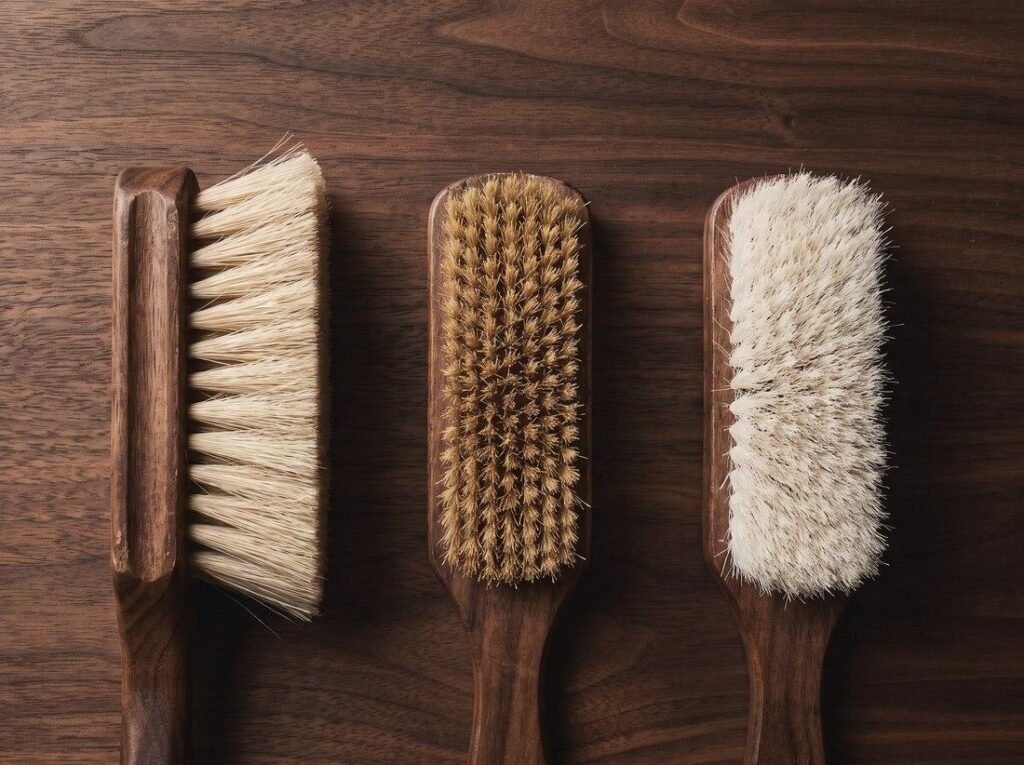
| IMAGE — bristle comparison. Position: directly under this section’s table.ALT: Three shoe-brush heads side by side on wood — pale horsehair on the left, tan boar bristle in the center, and soft white goat hair on the right |
Matching the Brush to the Job
| Brush Job | What the Brush Should Do | Best Starting Tool |
|---|---|---|
| Everyday dust removal | Lift dry surface grit without being overly aggressive | Medium horsehair brush |
| Applying cream | Put a small amount of cream into seams, brogueing, and around the welt | Small horsehair dauber/applicator |
| Buffing smooth leather | Remove excess cream or wax and develop an even shine | Dedicated horsehair polishing brush |
| Final high-shine pass | Minimize the chance of disturbing a delicate wax finish | Very soft goat-hair finishing brush or clean soft cloth |
| Raising suede nap | Lift flattened fibers and loosen embedded dry dirt | Crepe/rubber brush or gentle brass-and-nylon suede brush |
| Cleaning welts and edges | Reach narrow grooves and the edge of the sole | Welt/edge brush or a dedicated toothbrush |
What Is the Best Hair for a Shoe Brush?
Horsehair: The Best All-Purpose Choice
A horsehair shoe brush is the practical default for smooth leather shoes and boots. Its balance of firmness and flexibility makes it useful for dry dusting, buffing cream, and restoring a low-to-medium shine. Specialist shoe-care guidance describes horsehair as a medium-hard all-round brush suitable for removing dirt from regular leather and suede and for brushing up shoe cream.
When comparing horsehair brushes, look beyond the label. A densely packed brush usually gives more even contact with the upper and tends to feel more controlled. A solid wooden handle is comfortable during longer polishing sessions, while a smaller brush may be easier to maneuver around the heel and seams. More important than an exotic handle material is a dense, securely set bristle bed that does not shed excessively.
Horsehair works especially well as a horsehair brush for leather boots because boots offer more surface area and often pick up more dry dust around the vamp, quarters, and welt. Use quick, light strokes first to remove debris, then increase speed, not pressure, when buffing polish.
Boar Bristle: Firmer and More Targeted
Boar or wild-boar bristle brushes are generally shorter and stiffer than horsehair. They are useful when a cream needs to be worked into heavily textured grain leather, brogueing, or more robust boots. Their stiffness can generate more friction, which some shoe-care enthusiasts use to work cream into the leather.
That firmness is also the limitation. Boar bristles are not the safest universal choice for fine calfskin with a delicate mirror shine, and they should not be treated as a substitute for a purpose-made suede brush. Consider boar bristle a specialized addition rather than the first brush to buy.
Goat Hair and Yak Hair: For the Final Finish
Very soft goat-hair brushes are finishing tools. They are useful after waxing, particularly where a hard horsehair brush might create fine marks in a high-gloss surface. Shoe-care specialist guidance identifies goat hair and yak hair as softer options for brushing up a wax shine, with goat hair a more readily available choice.
For most owners, this is an optional upgrade. If a shoe has a standard cream-polish shine rather than a mirror finish, a clean horsehair brush followed by a soft cloth is usually sufficient. Reserve the soft finishing brush for shoes whose shine you have deliberately built up with thin wax layers.
How to Polish Dress Shoes: From Beginner Shine to Mirror Finish
Synthetic, Nylon, and Plant Fibers: When They Make Sense
Synthetic bristles can be useful in specialty tools, especially combination suede brushes or inexpensive cleaning brushes. They are not automatically harmful, but quality and stiffness vary widely. For your primary smooth-leather buffing brush, natural horsehair remains the dependable choice because it offers a familiar, forgiving balance of flex and firmness. If buying synthetic, choose it for a defined task, such as a suede brush with outer nylon bristles or a scrub brush for non-leather athletic shoes, rather than simply because it is cheaper.
Should You Use Separate Brushes for Each Color?
Not necessarily for every color, but yes for functions that can transfer dirt or pigment. The practical minimum is to separate your cleaning brush from your polishing brush. A brush used to knock off street dust can retain grit; you do not want to work that residue into freshly conditioned leather. Specialist guidance makes the same distinction, recommending a separate brush for dirt removal when a brush is also used for cream.
Color separation becomes increasingly useful as you care for light-colored shoes. A brush that repeatedly buffs black or dark-brown pigmented cream may carry enough residue to dull or faintly tint a tan, cream, or white leather shoe. Rather than maintaining one brush for every shade, use a simple system.
| Collection Size | Sensible Brush System | Why It Works |
|---|---|---|
| One or two dark smooth-leather pairs | One dust brush and one dark-polish buffing brush | Low risk of noticeable transfer between similar dark colors |
| Mix of black, dark brown, and tan | One dust brush, one dark brush, and one light/neutral brush | Protects tan and lighter leather from darker pigment residue |
| Several light, white, or pastel leather pairs | One dust brush plus dedicated light/neutral finishing brush; separate colored cream applicators | Lighter leather reveals color transfer most easily |
| High-shine shoes | Keep a separate clean goat-hair finishing brush | Preserves the wax finish and keeps dust/pigment away from it |
This dark-versus-light approach is also the one commonly recommended by shoe-care specialists: use one brush for black and dark brown and another for lighter colors, while recognizing that a single brush can work if the owner accepts a small risk of darker transfer.
The rule is stricter for applicator brushes than for buffing brushes. An applicator goes directly into colored cream, so label one “black,” one “brown,” and one “neutral/light” if you use all three. A buffing brush carries less pigment when polish is applied in thin layers, but it is still wise to keep dark and light separate.
The Specialty Brushes Worth Owning
The Cream Dauber or Applicator Brush
This small, round-headed brush is built for applying cream precisely. It excels around eyelets, the welt, brogue perforations, and the junction between the upper and sole. A cloth can handle broad, smooth panels effectively, but a dauber reduces the chance of leaving visible cream deposits in seams. Use separate daubers for clearly different polish colors because their bristles become saturated with product.
The Suede and Nubuck Brush
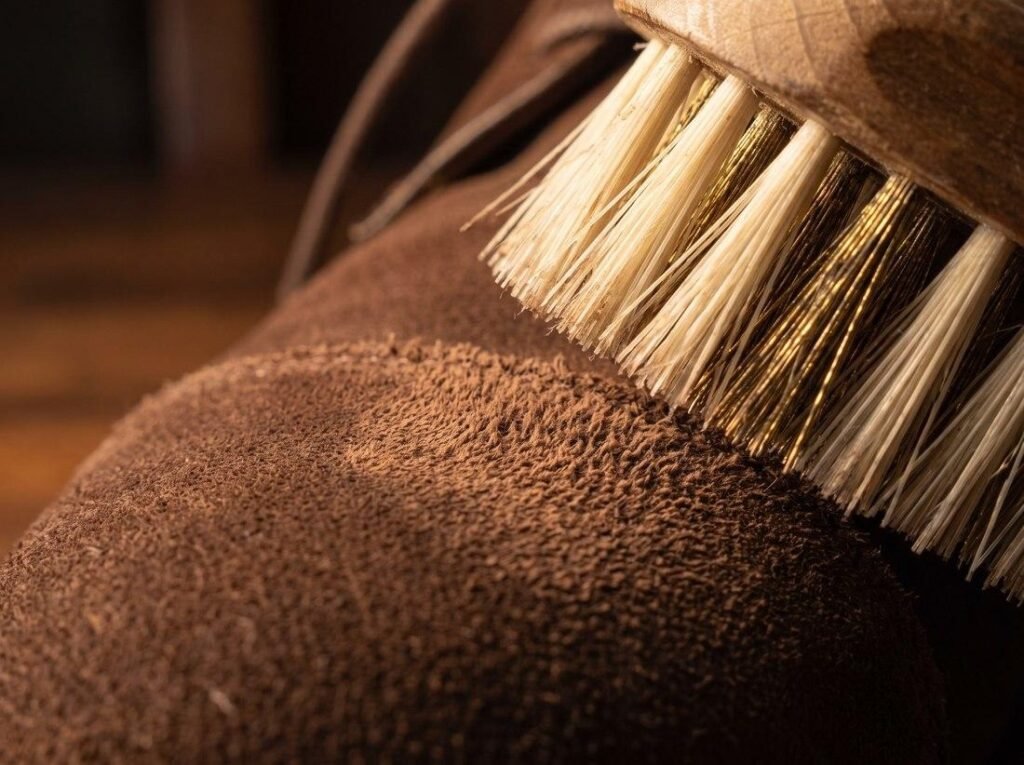
| IMAGE — suede brush close-up. Position: directly under this heading.ALT: Close-up of a brass-and-nylon suede brush lifting the nap on a brown suede shoe |
Suede is not smooth leather with a different color; its raised fiber structure needs a different approach. Do not use a brush coated in shoe cream or wax on suede. For routine dry dusting, a clean horsehair brush can be gentle enough, but it is not the best tool for reviving flattened nap.
For that job, select a suede-specific tool according to the condition of the shoe:
| Suede Condition | Preferred Tool | Technique |
|---|---|---|
| Light, dry surface dust | Clean horsehair brush | Brush lightly in one direction, then lightly against the nap if needed |
| Flattened nap or localized dry grime | Crepe/rubber brush | Use short, controlled strokes; the tacky surface helps lift dirt and restore texture |
| More stubborn dirt after testing an inconspicuous area | Brass-and-nylon or brass-and-boar combination brush | Use very light pressure and minimal passes; allow the brass core to work without scraping |
| Small, dry scuff or spot | Suede eraser, followed by a suede brush | Rub gently, remove eraser debris, then reset the nap |
A crepe rubber brush is widely used to clean and re-fluff suede and nubuck, while brass-core combination brushes are intended for careful lifting of the fibers. Aggressive brushing can damage the nap, so start with the least abrasive tool and stop once the fibers look revived.
The Welt or Edge Brush
The edge brush is one of the most useful overlooked tools. It is narrow enough to clean the channel where the upper meets the sole, reach welt stitching, and apply edge dressing without covering the upper in product. Loake notes that an old toothbrush can serve this role during cleaning. A purpose-made welt/edge brush is neater and easier to control, but a dedicated soft toothbrush is a sound low-cost alternative.
Keep this brush separate from your upper-polishing brush. Sole-edge dressing, dirt from the welt, and heavy pigments do not belong on the leather upper. If you use a colored edge dressing, reserve that brush solely for that color.
How to Clean Shoe Brushes Without Ruining Them
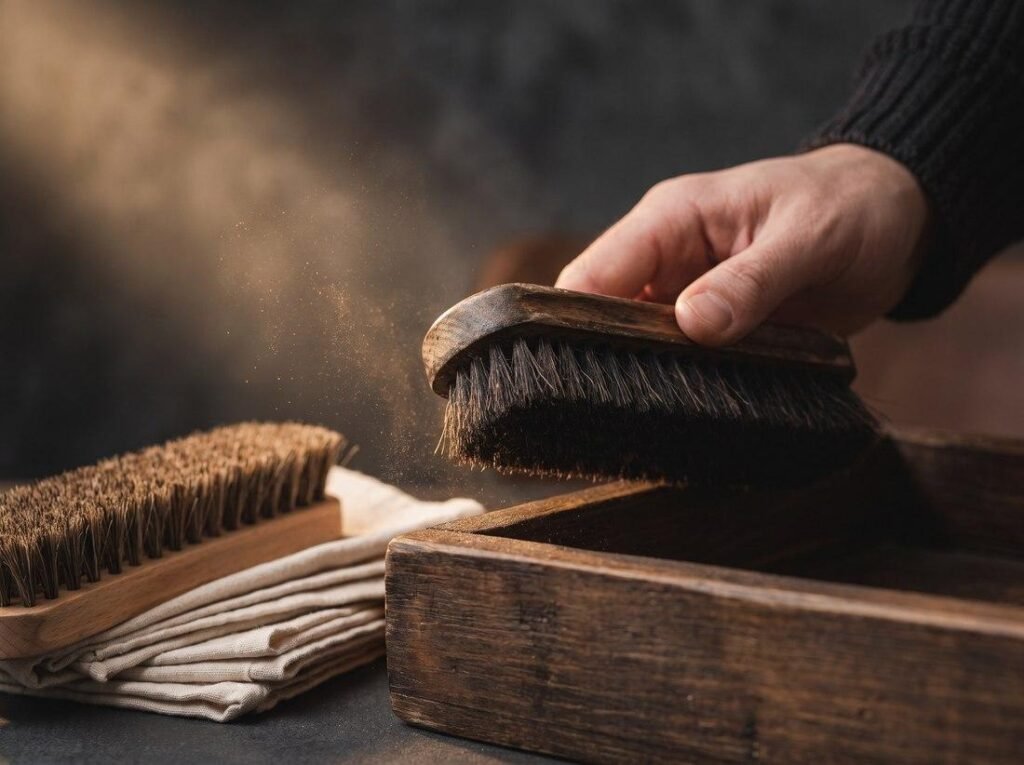
| IMAGE — cleaning / tap-out method. Position: directly under this heading.ALT: A horsehair brush being tapped bristle-down against a wooden box, releasing a cloud of dust into warm light |
A brush does not need to look new to work well. A horsehair polishing brush often becomes lightly stained by wax or cream, and that is normal. Clean it when the bristles feel clogged, leave visible deposits, transfer unwanted color, or no longer flex freely.
First, remove loose dust. Hold the brush bristle-side down and tap it gently against a clean cloth or the palm of your hand. For a brush with dried cream, rub the bristles briskly across a clean, dry towel; this can soften and remove much of the surface build-up. Specialist guidance recommends this dry method first and notes that a brush with more substantial cream build-up can be cleaned with dishwashing liquid.
When washing is necessary, use a small amount of mild dishwashing liquid in lukewarm water. Work only the bristle tips through the suds, avoiding prolonged soaking of the wooden block and glue line. Rinse until the water runs clear, squeeze, not twist, the bristles in a towel, reshape them, and leave the brush bristle-side down or on its side to air-dry fully. Do not use high heat, a hair dryer, or a radiator; strong heat can dry natural bristles and loosen the adhesive that holds the bristle clusters.
Storage affects lifespan too: keep brushes bristle-side down or lying flat in a ventilated tray or drawer, never bristle-up in a closed tin where trapped moisture can encourage mildew in natural bristle or loosen the glue line. Store dirt, polish, and suede brushes in separate compartments so residues do not transfer between them while sitting in storage.
Important: Do not wash a suede brass brush, crepe brush, or edge-dressing brush by default. Remove dry debris as appropriate for the tool. Water can damage crepe, encourage corrosion in metal bristles, or spread a pigmented edge product.
A Simple Shoe-Brush Kit That Covers Almost Every Need
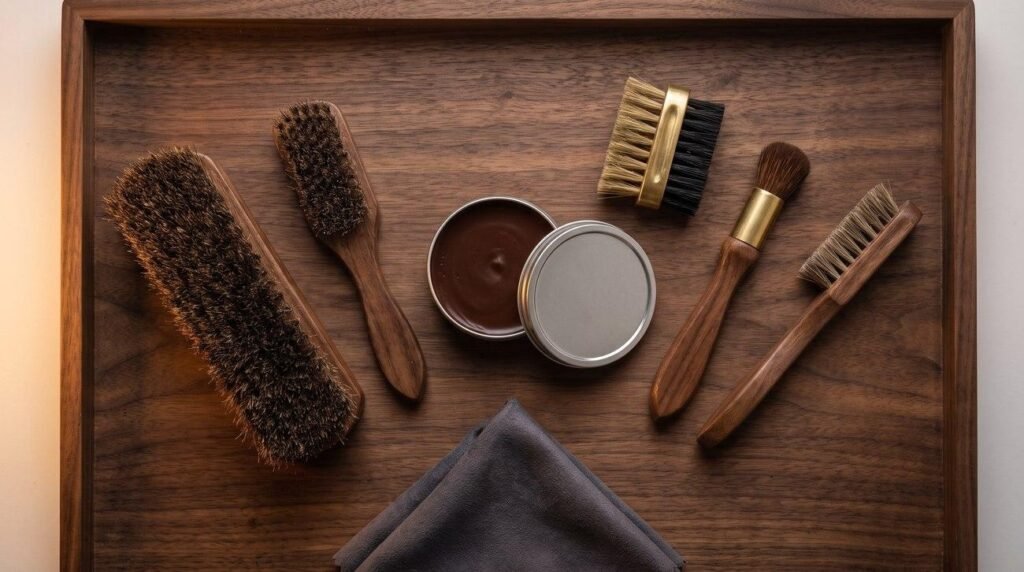
| IMAGE — kit flat-lay. Position: directly under this heading.ALT: Overhead flat lay of a complete shoe-brush starter kit — horsehair brush, boar-bristle brush, suede brush, cream dauber, welt/edge brush, an open tin of shoe cream, and a folded polishing cloth on a wood tray |
A well-equipped kit does not have to be large. Start with one large horsehair brush reserved for dry cleaning, a second horsehair brush for polishing, and a small applicator brush. If you own both dark and light smooth leather, add a light/neutral buffing brush or, at minimum, separate applicators by color. From there, buy tools based on the footwear you actually wear: a suede brush for suede or nubuck, an edge/welt brush for welted shoes and boots, and a goat-hair finisher only if you regularly build a high shine.
| If You Own… | Buy This Next | Purpose |
|---|---|---|
| Smooth calfskin shoes | Horsehair shoe brush | Dusting and post-polish buffing |
| Black and tan leather shoes | A second horsehair brush and color-specific daubers | Limit dark-pigment transfer |
| Leather boots with welts | Welt/edge brush | Clean stitching and control edge dressing |
| Suede or nubuck shoes | Crepe/rubber suede brush; optional gentle brass combination brush | Clean and revive the nap |
| Mirror-shined dress shoes | Goat-hair finishing brush | Light final buff with minimal disturbance |
The Bottom Line
The best first purchase is a dense, medium-firm horsehair brush for shoes. It gives smooth leather the routine care it needs: dry dust removal, post-cream buffing, and a clean, even sheen. Protect that investment by separating your dirt-removal brush from polishing brushes, and protect lighter leather by keeping dark-polish tools away from it.
As your shoe wardrobe becomes more varied, specialize thoughtfully. Add a small applicator for cream, a suede brush for suede and nubuck, and an edge brush for welts and sole edges. Brushes do not need to multiply endlessly; they simply need clear roles. With clean tools and light, consistent technique, your shoes will look better, and the care routine will become faster rather than more complicated.
Frequently Asked Questions
Can one horsehair brush be used for all shoes?
It can, especially if your shoes are all dark and you clean the brush regularly. However, a separate dark and light brush is inexpensive insurance if you own tan, cream, white, or pastel leather. At minimum, keep the brush used for dry cleaning separate from the brush used to buff freshly polished shoes.
Can I use a horsehair brush on suede?
Yes, provided it is completely clean and you use a gentle touch. It is appropriate for light surface dust. For flattened nap, embedded dirt, or post-cleaning restoration, use a suede-specific crepe/rubber or carefully used brass combination brush instead.
How often should I clean a shoe-polish brush?
Clean it when there is functional build-up, not on a rigid schedule. Tap and wipe loose residue away after use. Wash only when the brush has become clogged, stiff, visibly dirty, or risky to use on a different color. Frequent soaking is unnecessary and can shorten the life of a wooden-backed natural-bristle brush.
Is boar bristle better than horsehair?
Neither is simply “better”; they perform different jobs. Horsehair is the more versatile choice for cleaning and buffing smooth leather. Boar bristle is firmer and can be useful for textured grain, vigorous cream work, and certain durable boot-care tasks. Start with horsehair and add boar only if your shoes give it a specific job.
How long should a shoe brush last?
A quality natural-bristle brush with a solid wooden back can last for many years, often a decade or more, if it stays dry, is cleaned only when needed, and is kept away from direct heat. Replace a brush when bristles fall out in clumps, the block cracks, or washing no longer restores its flex.
What size brush should I buy first?
A medium to large horsehair brush is easier to control across broad panels like the quarters and toe box, while a smaller brush maneuvers better around the heel counter and lacing area. Many owners eventually keep one of each size; if buying only one, choose a medium size that fits your hand comfortably.
Lace up. Zip up. Slip in.
The Bespoke Sole