When it comes to dress shoes, length gets all the attention. Width is the half of the equation that decides whether a pair feels like a firm handshake or a day-long liability. The wrong dress shoe width causes pain, ugly creasing, premature wear, and real foot problems over time. This guide covers the letter systems (US, UK, EU), how to measure at home, how to read fit on the shoe itself, the health stakes, and which brands still bother to cut more than a single D last.
Decoding Shoe Width Systems
Width is primarily the girth around the ball of the foot, the widest part, not a simple side-to-side flat measurement. Letter systems differ by region.
North American (Brannock-based): the men’s standard (medium) width is D.
- B / C, Narrow; D, Standard / medium; E, Wide; EE (2E), Extra wide; EEE–EEEEEE, progressively more volume across the forefoot.
UK System: UK letters do not match US letters. For many English makers, F is the standard men’s medium; some houses (Crockett & Jones, Edward Green) treat E as their house standard.
- E, Narrow (or standard at some brands); F, Standard / medium; G, Wide; H, Extra wide.
European (EU) System: EU sizing is mainly length (Paris points). Width letters, when used, often echo UK practice, and many Continental brands simply scale width with length, which pushes buyers to size up in length for volume, a bad trade that misplaces the flex point and arch.
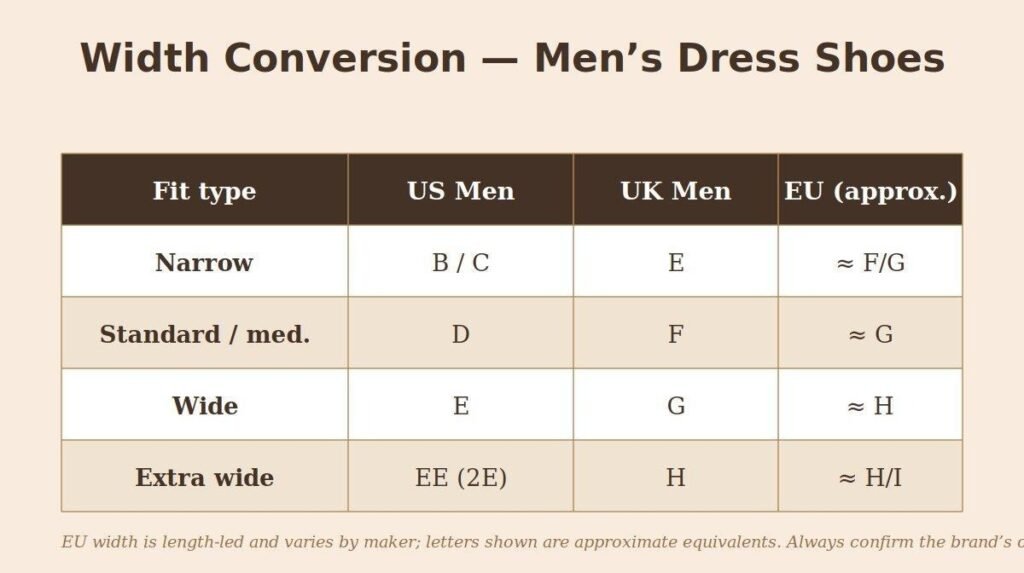
Always confirm against the brand’s own chart, house lasts vary more than the letters imply.
How to Measure Your Foot Width at Home
A store Brannock device is ideal. At home you only need paper, a pen, and a ruler.
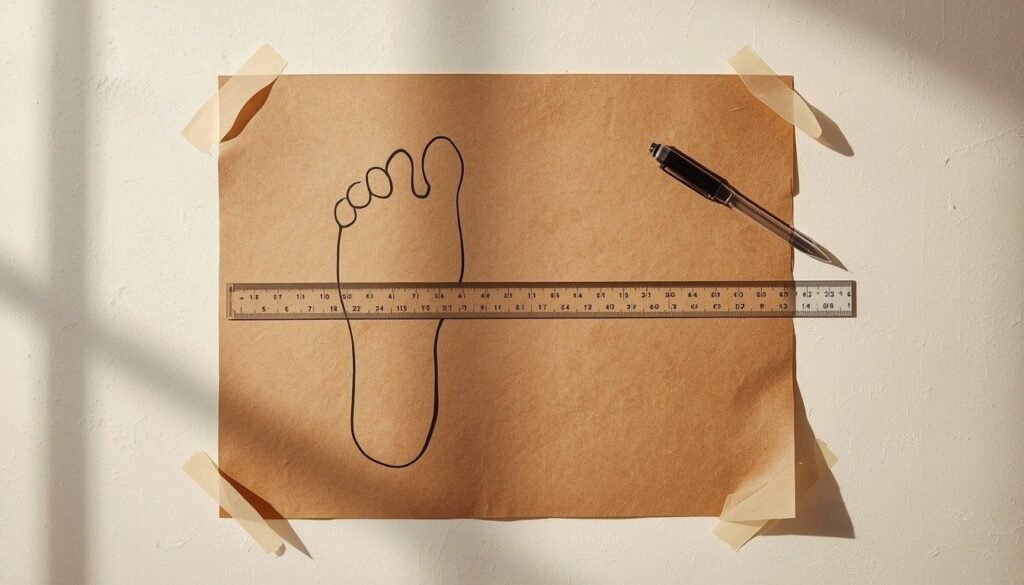
- Time it right, late afternoon or evening. Feet swell during the day; measuring at peak size avoids shoes that clamp by 5 p.m.
- Wear the right socks, the dress socks you will actually wear with the shoes.
- Trace, hard floor, paper against a wall. Stand with weight even. Hold the pen vertical and trace the outline; do not tip the pen under the foot.
- Mark the widest points, usually across the ball, just behind the toes.
- Measure, the straight-line distance between those points (inches or cm).
- Both feet, use the larger, wider foot for sizing.
Cross your length size and width measurement with that brand’s width chart. One brand’s “E” is not another’s.
The Anatomy of Fit: Signs of the Wrong Width
Dress leather does not forgive like a knit sneaker. Aim for snug and supportive, never painful.
Too narrow: the “V” gap, on Oxfords (closed lacing), the facings should meet or leave a small, neat V. A wide, straining V means too little volume or width across the instep and forefoot. Other signs: leather bulging past the welt, cramped or overlapping toes and pressure on the fifth toe, and blisters or red bars on the sides after wear.
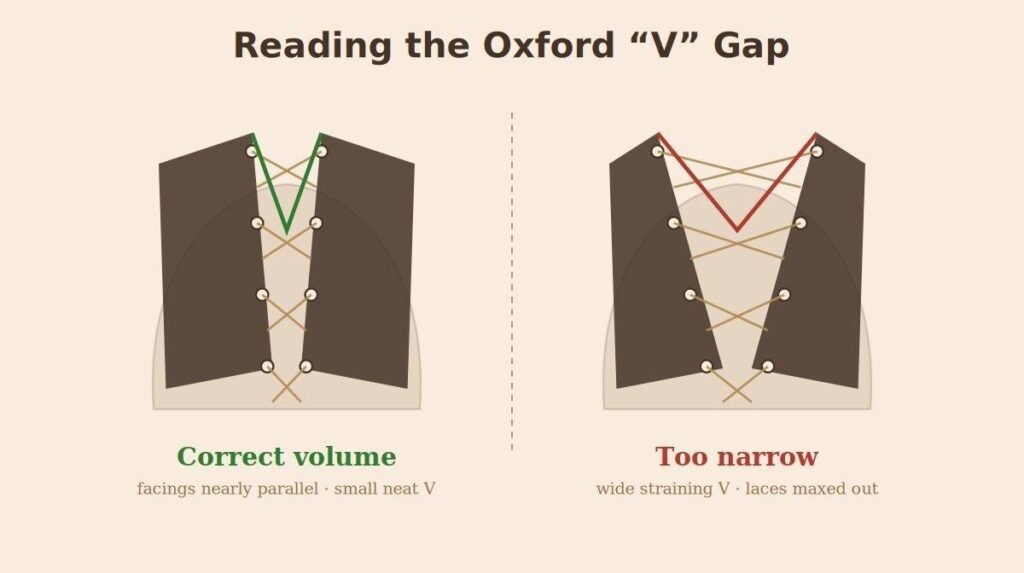
Too wide: persistent heel slip (a little slip in stiff new leather is normal; ongoing slip means excess rear width), deep, ugly vamp creasing where empty volume lets the upper collapse, and side-to-side sliding that costs support and stability.
The “mixed geometry” problem: a wide forefoot with a narrow heel is common. Jumping straight to EE can free the toes but wreck the heel. Derbies (open lacing) often beat Oxfords here because the facings adjust independently across the instep. Combination lasts or made-to-order and bespoke are the long-term fix when ready-to-wear widths fail.
Health Implications of the Wrong Width
The wrong width is not only a matter of comfort or looks, over years, a poorly fitted shoe can contribute to real foot problems. In broad terms:
- A too-narrow toe box crowds the toes and, over time, is associated with bunions, the bony prominence at the base of the big toe.
- Chronic cramping can encourage toes to sit in a bent position that becomes harder to reverse (hammertoes).
- Pressure across the ball of the foot can pinch the nerves between the long bones, producing the sharp pain or numbness people describe with conditions like Morton’s neuroma.
- Both too-wide shoes (too little support) and too-narrow shoes (restricted natural movement) can load the arch poorly and aggravate heel and arch pain.
This is general information, not medical advice. If you have foot pain or an existing condition, see a podiatrist, and prioritize brands with true width runs and lasts that match your foot shape rather than “half size up” workarounds.
Brand Guide: Who Actually Stocks Width
Most dress lines cut only D to control inventory. A few still take width seriously.
- Allen Edmonds (US): a broad ready-to-wear width grid on core models such as the Park Avenue, often AAA through EEE depending on style. Classic US Brannock-oriented sizing; check the current size chart per model.
- Alden (US): last-driven fit (Barrie, Modified, Trubalance). Some shoes show fractional widths. The Barrie and several other lasts often run large, common advice is a half size down from Brannock, confirmed on foot.
- Adelante Shoe Co. (US / Guatemala): made-to-order Goodyear-welted options with a very wide width span (roughly C through EEEEE on many builds) without the usual upcharges, useful when you need extreme width in classic styles.
- Crockett & Jones (UK): house standard often E (UK). Select models in a narrower C/D or wider F/G. Translate letters carefully if you only know US D/E.
Buying Rules That Save Returns
- Don’t size up in length for width. A longer D shifts the flex point and arch; you want E/EE (or UK G) in your true length.
- Respect the last. Two “D” shoes from one brand can feel different if one last is round and one is tapered.
- High instep or wide foot? Default to a Derby before forcing an Oxford.
- Measure, then verify on foot. Charts start the conversation; the leather, sock, and last finish it.
- Break-in is not the same as wrong width. Snug is fine; numbness, hot spots, and a screaming V are not “character.”
Finding the right dress shoe width takes a tape measure, a few brand charts, and honesty about Oxford versus Derby. The payoff is clean creasing, all-day comfort, and shoes that age like they were built for your foot, not a warehouse average.
Get in Touch
Spotted a shoe worth examining, want to send a pair in for review, or have a correction? The Bespoke Sole is an independent editorial studio, and I read everything that comes in. Reach the studio here.
Lace up. Zip up. Slip in.