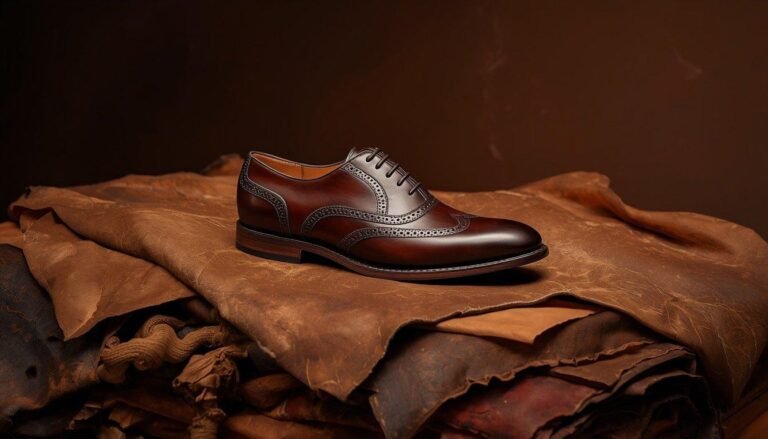
Your dress shoes are usually made from more than one kind of leather. Here is what each went through at the tannery, and what that means for the polish, cream, and brush you reach for.
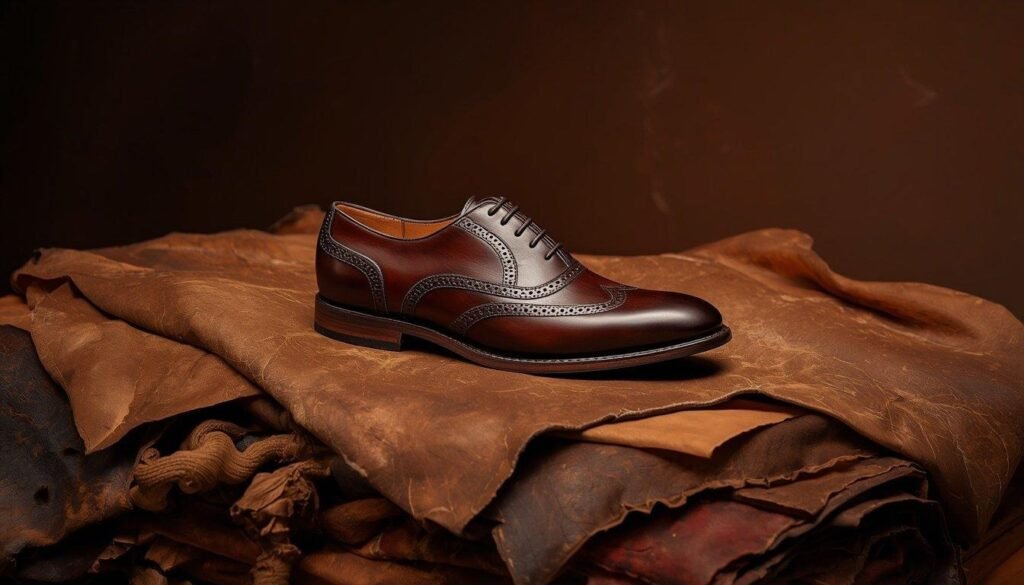
Leather is tanned by treating a prepared animal hide with tanning agents, usually plant tannins or chromium salts, that stabilize the hide’s collagen. That turns a perishable skin into durable leather. The tannery then adds oils, dyes, and surface finishes to give the leather the character a shoemaker needs.
Look closely at a good pair of dress shoes and you will usually find more than one tannage at work. The supple calf upper and the firm leather sole beneath it often came from very different tanneries, by very different routes. That difference matters when you open a tin of polish. But a second detail matters just as much: the tanning method and the surface finish are not the same thing.
I wrote this guide because the question I hear most, “is this leather veg-tanned or chrome-tanned?”, is only half the question. The other half is what was done to its surface.
What Is Leather Tanning?
Leather tanning is the treatment that makes an animal hide resist rot. Its main target is collagen, the fibrous protein that gives skin its structure. Tanning stabilizes those fibers against bacteria, heat, and moisture. It does not make leather indestructible, which is why your shoes still need care.
The work happens at a tannery. Some handle every stage from raw hide to finished leather; others specialize. Two names matter to anyone who loves shoes. J&FJ Baker in Devon is the last oak bark tannery in the UK, and Horween in Chicago produces the shell cordovan used by many American shoemakers.
Tanning is also different from dyeing. Tanning changes the hide’s stability; dyeing gives it color. A tan-colored oxford might be vegetable-tanned, chrome-tanned, or both. You cannot tell the method from the color.

How Is Leather Tanned? The Process Step by Step
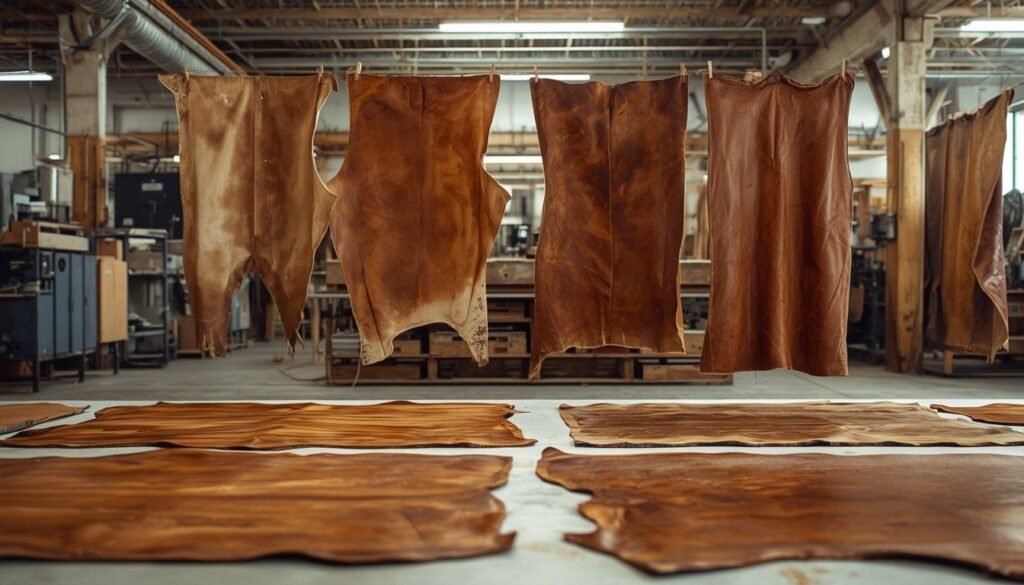
The commercial leather tanning process mixes chemistry with heavy machinery. The sequence varies by hide and by the leather being made, but most shoe leather passes through six stages.
1. Preserve and soak the hide
Raw hides are often salted or brined to stop them rotting before they reach the tannery. This is called curing. It is preservation, not tanning. At the tannery, soaking rinses out the salt and dirt and rehydrates the hide.
2. Remove hair and unwanted tissue
Liming loosens the hair and opens up the fiber structure. A fleshing machine then strips fat and tissue from the inner side. Many hides are split into layers at this stage or after tanning. The top layer keeps the grain surface used for calf uppers. The lower layers become split leather and, very often, suede.

3. Prepare the hide for the tanning agents
Deliming reduces the alkalinity left by the lime, and an enzyme treatment called bating softens the hide. For chrome tanning, the hide is then pickled in salt and acid so the tanning agents can penetrate evenly.
4. Tan the hide
This is the stage that turns hide into leather. The tannery introduces vegetable tannins, chromium salts, or another system, and controls conditions until the agent has worked through the whole thickness. Time varies enormously. A chrome tannage can be finished in about a day, according to Leather Naturally, while traditional pit tanning for sole leather runs for months. Herring Shoes, after visiting J&FJ Baker, reports around 13 months to make finished oak bark leather.
5. Adjust thickness, color, and softness
The leather is shaved to an even thickness, retanned, and dyed. The tannery also works oil emulsions into it, a step called fatliquoring, which gives leather its suppleness. This is a factory process. It is not the same thing as rubbing conditioner into your shoes at home.
6. Dry and finish the leather
The leather is dried under controlled conditions, then finished. Finishing can mean a clear or pigmented coating, an embossed grain pattern, or polishing and glazing. For care, this last stage matters most. Two shoes cut from the same tannage can need different products because their surfaces were finished differently.
The Main Leather Tanning Methods
Chrome tanning: the leather on most uppers
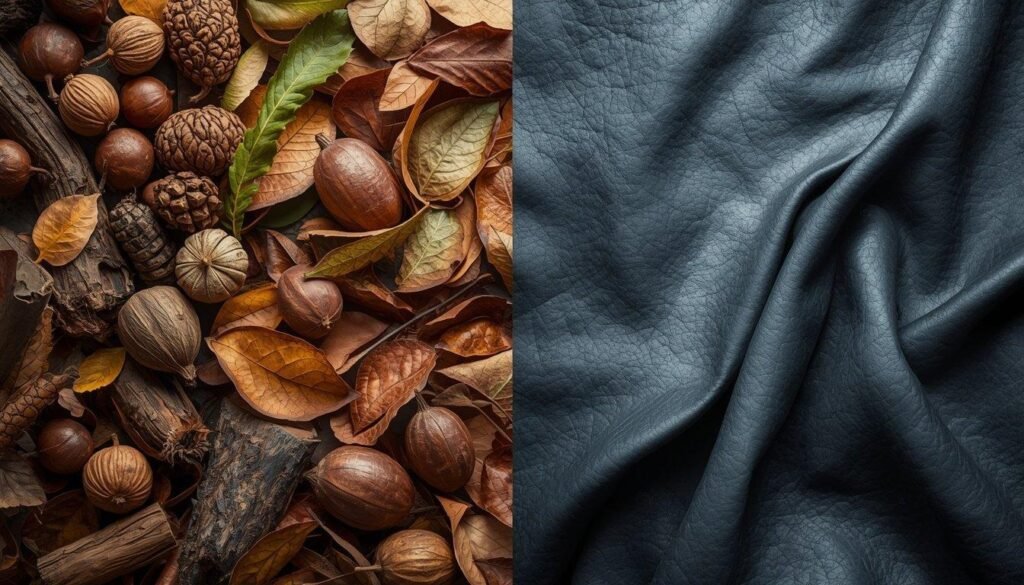
Chrome tanning uses trivalent chromium salts (chromium III, not the hazardous chromium VI). It is fast and consistent, and it produces leather that is soft, flexible, and fairly resistant to water and heat. Most calf uppers are chrome-tanned. Box calf, the classic dress-shoe leather, is defined in industry terminology as full chrome tanned calf, according to the Leather Working Group. Straight out of the drum, chrome-tanned hides are a pale blue-grey, known in the trade as “wet blue.” Dyeing and finishing give them their final color.
Vegetable tanning: soles, insoles, and shell
Vegetable tanning uses tannins from bark, wood, leaves, and pods. Oak, chestnut, mimosa, and quebracho are common sources. The process is slower and produces a firmer, denser leather that holds its shape, which is why it has long been the standard for leather soles, insoles, and heel stacks. Shell cordovan is vegetable-tanned too; Horween says its process takes at least six months. Veg-tanned uppers exist as well, and Shoegazing notes they stain more easily and change character faster than chrome-tanned leather.
Despite the name, vegetable-tanned leather is still animal leather. “Vegetable” describes the tanning agent.
Combination tanning
Many leathers use both. A hide may be chrome-tanned and then retanned with vegetable extracts to add body. Chrome-free systems also exist, using aldehydes or synthetic agents. The practical lesson: a single label rarely tells you everything about the leather on your feet.
Why the Tanning Process Changes Shoe Care
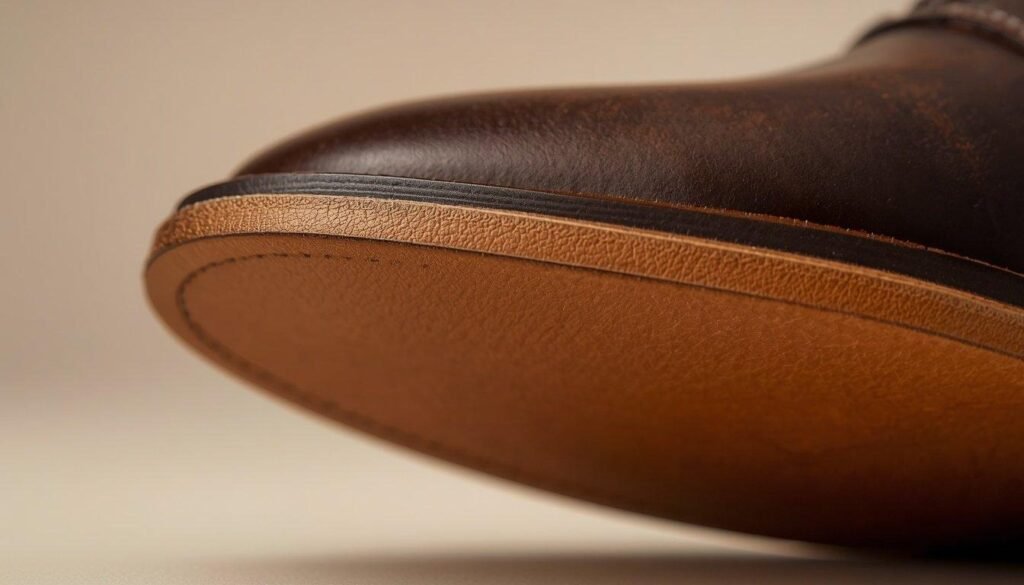
Tanning shapes the leather beneath the surface. Finishing decides what rain, dirt, and polish touch first. A good care routine considers both.
Rain affects each leather differently
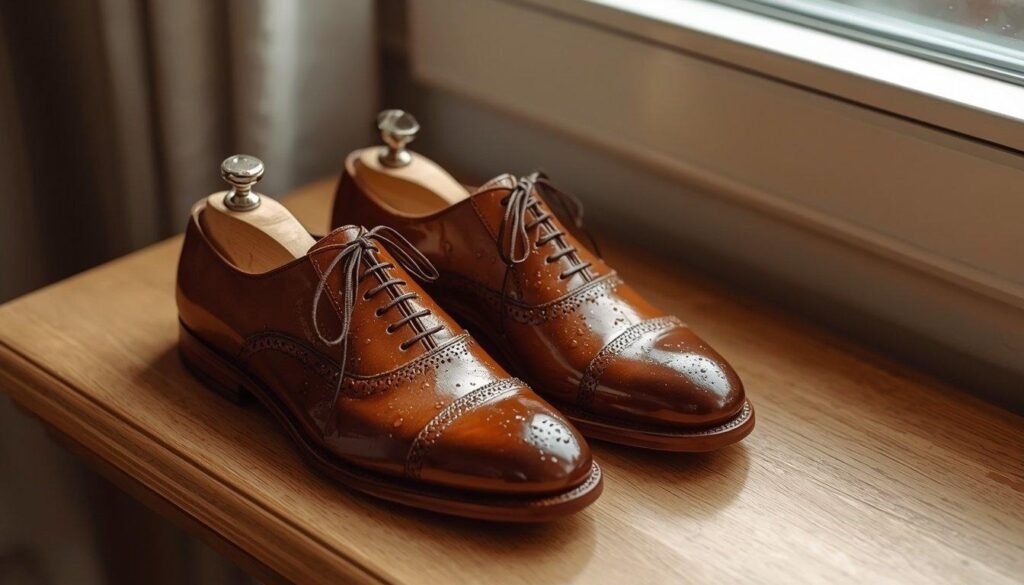
Chrome-tanned calf handles a shower better than most veg-tanned leathers, but it is not waterproof. Veg-tanned soles are more vulnerable: they absorb water, soften, and wear faster while wet. The Canadian Conservation Institute also notes that repeated swings in humidity can progressively harden vegetable-tanned leather.
If your shoes get soaked, blot them, slip in cedar shoe trees, and let them dry naturally at room temperature for at least a day before wearing them again. Never use a radiator, hairdryer, or direct sun to speed things up.
The finish matters more than the tannage
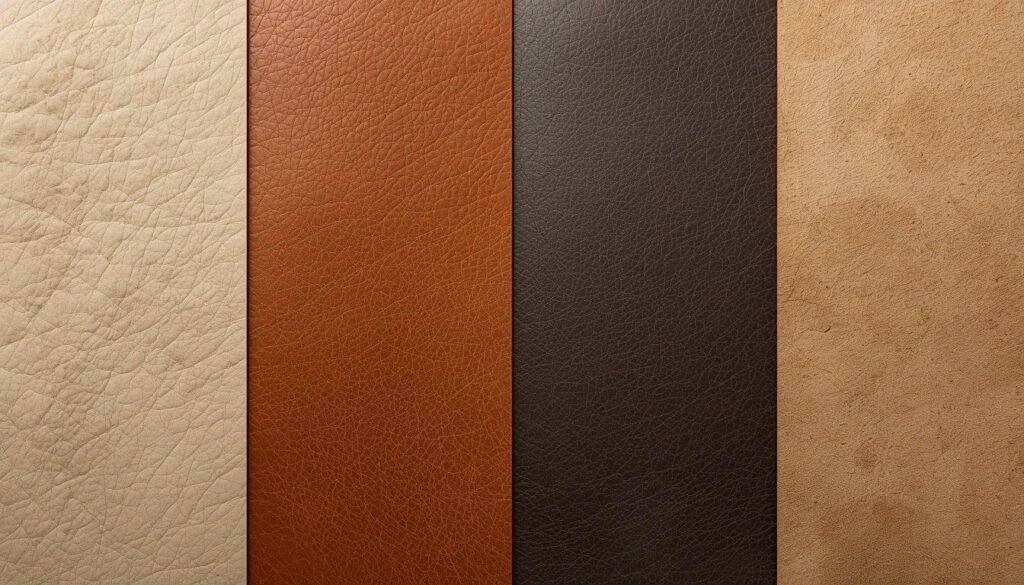
Aniline leather shows its natural grain with no pigmented coating, though it may carry a clear one. Much fine dress calf, including box calf, is aniline dyed. It is more absorbent, so it takes cream polish beautifully and gains depth over time, but it also marks more easily. Blot water spots; do not scrub them.
Corrected-grain leather, sometimes sold as “polished binder,” has its surface sanded and sealed under a pigmented, plastic-like coating. It shines straight away and resists stains, but cream polish and conditioner sit on top of the coating rather than soaking in. A damp cloth and a little wax are usually all it needs.
“Full-grain” answers yet another question: whether the original grain was left intact. It does not tell you the tanning method.
Conditioning is a judgment call, not a calendar rule
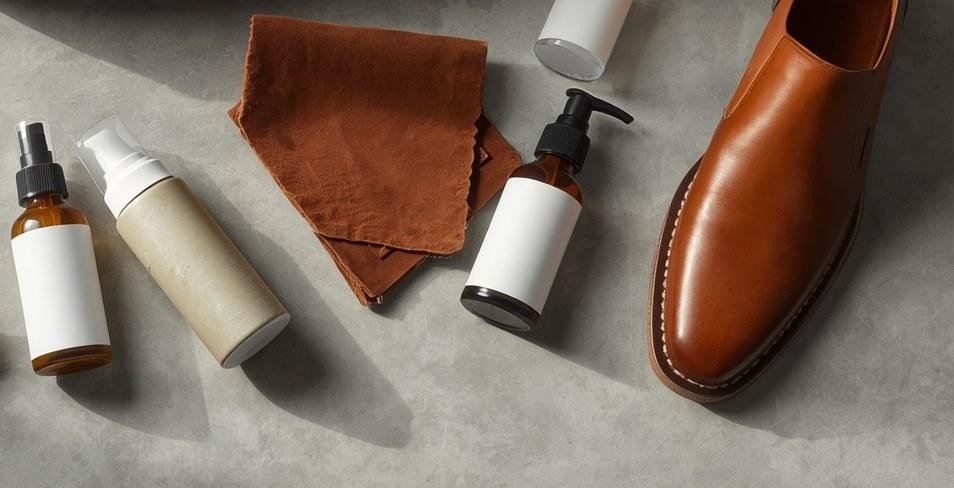
A chrome-tanned label does not mean your shoes never need conditioning, and a veg-tanned label does not mean they need oiling every month. Read the leather instead. If it looks dry and dull, or the creases have gone pale, it is time to condition or polish it. When you do condition, a thin coat of a dedicated conditioner such as Saphir Renovateur goes further than a heavy one. Test any new product on the tongue or inside the heel first, and let it dry before you judge the result.
Leather soles are their own case. Opinions differ on sole conditioners: a light treatment can help a dry sole, but a slick, oversaturated sole is worse than a plain one. Rotation and a good cobbler matter more.
Polish and shell cordovan
On smooth calf uppers, a cream polish restores color and nourishes the leather, while wax adds shine and a protective layer on the toe and heel. Shell cordovan is different. Its dense, oil-rich fibers respond best to brushing and a damp cloth for water spots, with only occasional cream. As Stitchdown notes, shell tends to roll rather than crease, and heavy wax buildup tends to dull it.
Suede and nubuck need their own tools
Suede and nubuck describe napped surfaces, not tanning methods. Nubuck is buffed on the grain side; suede comes from the flesh side or a split. A smooth-leather cream will mat the nap. Use a suede brush to lift dirt and restore the nap, and a protector spray made for napped leather. For more on each leather type, see our guide to calfskin, shell cordovan, suede, and nubuck.
Chrome-Tanned vs. Vegetable-Tanned: Shoe Care Product Comparison
There is no separate product shelf for chrome-tanned or veg-tanned shoes. What changes is how each leather handles water, how its surface was finished, and which part of the shoe you are treating.
| Product | Chrome-tanned calf uppers | Veg-tanned soles and shell cordovan | Watch out for |
|---|---|---|---|
| Damp cloth or mild cleaner | A good first step for routine dirt. Corrected-grain wipes clean easily. | Use sparingly on soles. On shell, a damp cloth handles water spots. | Never soak the leather. Dry on cedar trees. |
| Conditioner | When the leather looks dry or the creases go pale. Thin coats. | Optional on a dry sole. Shell rarely needs it. | Test on a hidden spot first. It can darken light leather. |
| Cream polish | Restores color and depth on aniline calf. | Light, occasional use on shell. Not for soles. | Little effect on coated corrected-grain. |
| Wax polish | Shine and light water protection on toe and heel. | Thin layers on shell only if wanted. | Buildup cracks and dulls. Strip it occasionally. Never on suede. |
| Suede brush and protector | For suede or nubuck uppers, whatever the tannage. | Not needed for soles. | Never use smooth-leather cream on a napped surface. |
Frequently Asked Questions
What does veg-tanned leather mean?
It means an animal hide has been turned into leather using plant tannins. It is not vegan leather, and the term does not tell you how the surface was finished. On dress shoes, you will most often find it in the soles, insoles, and shell cordovan.
How long does the leather tanning process take?
It depends on the method. A chrome tannage can take about a day. Horween says its shell cordovan takes at least six months from start to finish, and oak bark sole leather at J&FJ Baker takes around 13 months.
Is curing leather the same as tanning it?
No. Curing preserves a raw hide with salt or brine before it reaches the tannery. Tanning is what converts the hide into leather.
Does tan leather mean vegetable-tanned leather?
No. “Tan” is a color. “Tanned” describes the treatment. Both vegetable- and chrome-tanned leather can be dyed any color.
Is vegetable-tanned or chrome-tanned leather better for shoes?
Neither is better across the board. Good shoes often use both: chrome-tanned calf for a supple, water-resistant upper, and vegetable-tanned leather for a firm sole that molds to your foot. For care, the finish and the maker’s instructions matter more than the tannage.
Do leather soles need conditioning?
Not always. Keeping soles dry, rotating your shoes, and resoling before you wear through to the welt do more for them than any product. A light sole treatment can help if a sole looks dry, but avoid saturating it.
Lace up. Zip up. Slip in.
The Bespoke Sole